

The History of Live Dealer Gaming: From Studios to Streaming
Live dealer gaming emerged in the early 2000s as a response to regulatory restrictions on online gambling. The technology evolved from studio-based operations to distributed streaming infrastructure.
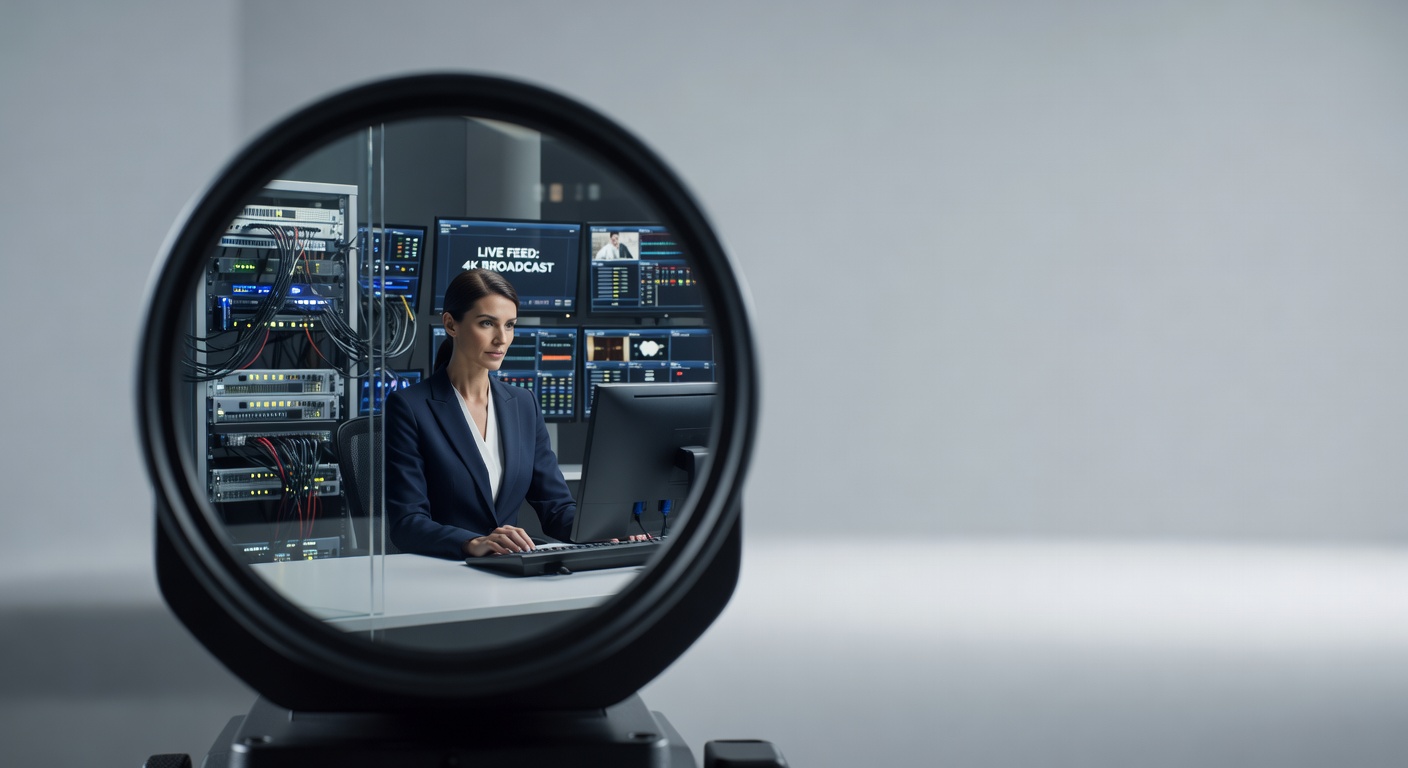
Live dealer gaming began as a solution to a regulatory problem. In the late 1990s and early 2000s, online casinos faced questions from gaming authorities worldwide. How could regulators verify that the games were fair? How could they ensure the random number generator was truly random?
The answer was surveillance. If a regulator could watch the game being played, watched by a human dealer in real time, recorded on video, then fairness could be verified.
the first licensed live dealer operations began in Cyprus around 2003. They were small. A dealer sat at a table. A camera pointed at the table. A stream was sent to an online player. The player watched and controlled the game through a computer interface.
This was revolutionary. It was the first time an online casino could claim, with evidence, that the games were not predetermined.
The Early Regulatory Framework
The Alderney Gambling Control Commission was among the first to regulate live dealer gaming. Alderney is a Channel Island with a small population. It became a haven for online gambling companies because it offered licensing with clear rules.
The commission required that live dealer streams be continuously recorded. That dealers follow strict protocols. That the camera angle show the entire deck and all player decisions. That independent auditors test the systems quarterly.
Malta followed in 2004. The Malta Gaming Authority developed a licensing framework for live dealer operators. By 2005, multiple platforms were offering live blackjack and roulette to players worldwide.
The UKGC (United Kingdom Gambling Commission) issued guidance in 2007 clarifying that live dealer games could be offered to UK players if certain conditions were met. The dealer's location mattered less than the regulatory status of the operator.
The Technology Evolution
Early live dealer studios were simple. One table. Three camera angles. Basic encoding. The stream often lagged. The quality was poor by modern standards.
By 2010, the technology had advanced. Multiple tables per studio. High-definition video. Audio from the dealer. Automated betting buttons on the player interface.
Evolution Gaming, founded in 2006, became the dominant provider. They built studios in Latvia, Malta, and the United Kingdom. By 2015, they had over 1,500 dealers and a global reach.
Pragmatic Play (PlayTech's gaming division) followed. Microgaming added live dealer offerings. Playtech built their own studios.
Each company competed on infrastructure: better encoding, lower latency, more game variety.
Regulatory Expansion
The New Jersey Division of Gaming Enforcement began regulating online gambling in 2013. Live dealer gaming was explicitly permitted under the regulations, provided the operator held a valid gaming license and the broadcast originated from a licensed facility in New Jersey or an approved international location.
The European regulator (by each country's standards) diverged. The Curacao eGaming Authority provided licensing for live dealer operations but with lighter regulation than the UKGC. This created a tiered market: stricter regulation in the UK and EU, lighter regulation for international-focused operators.
Modern Studio Operations
A live dealer studio today functions as follows:
Each gaming table is equipped with multiple cameras, ranging from 4 to 12 depending on the game. The cameras capture overhead angles, side angles, and close-ups of card handling. The feeds are mixed in real time.
The video is encoded and compressed. The bandwidth requirement is substantial. A single table can generate 15 to 25 megabits per second of video data.
The encoded stream is distributed to players through a CDN (content delivery network). This ensures low latency. A player in New York sees the dealer's action within 1 to 2 seconds of when it occurs.
Audio is two-way. The dealer hears players through headsets. The player hears the dealer and the game table sounds.
The dealer's betting interface connects to the casino's backend system. All bets are recorded instantly. Payouts are calculated and credited in real time.
The Compliance Layer
Every transaction is logged. Every hand of blackjack is recorded on video and stored for 90 days (the retention period varies by regulator). Dealers are trained on anti-cheating protocols. Table inventory is reconciled daily.
The Maltese operators (Evolution, Pragmatic) are subject to audits by independent testing laboratories approved by the MGA. The audits verify that the RNG (random number generator for side games), the game logic, and the payout percentages match the operator's claims.
Operators in stricter jurisdictions (UK, New Jersey) are subject to additional controls. Background checks on all dealers. Continuous monitoring for collusion. Segregation of customer funds in escrow accounts.
Current Trends
Asian expansion has been significant since 2015. Operators have opened studios in the Philippines, India, and Cambodia to serve Asian-focused casinos. The advantage is lower labor costs (dealers earn $5 to $8 per hour in Cambodia, versus $15 to $20 in Malta).
Virtual reality is being tested. A few operators are experimenting with VR interfaces that allow players to see the table from a first-person perspective.
Game variety continues to expand. Beyond blackjack and roulette, operators now offer baccarat variants (Squeeze Baccarat, Speed Baccarat), poker variants (Ultimate Texas Hold'em), and unique games like Monopoly Live and Dream Catcher.
The Regulatory Future
New jurisdictions continue to enter the market. Ontario began regulating online gambling in 2022 and explicitly permits live dealer gaming. Brazil, Mexico, and several African jurisdictions have begun licensing frameworks.
The technology is now mature. The regulatory frameworks are established. Live dealer gaming is no longer a novel offering. It is a standard product in the industry.