

Is Speed Baccarat Worth It or Just Faster Losses?
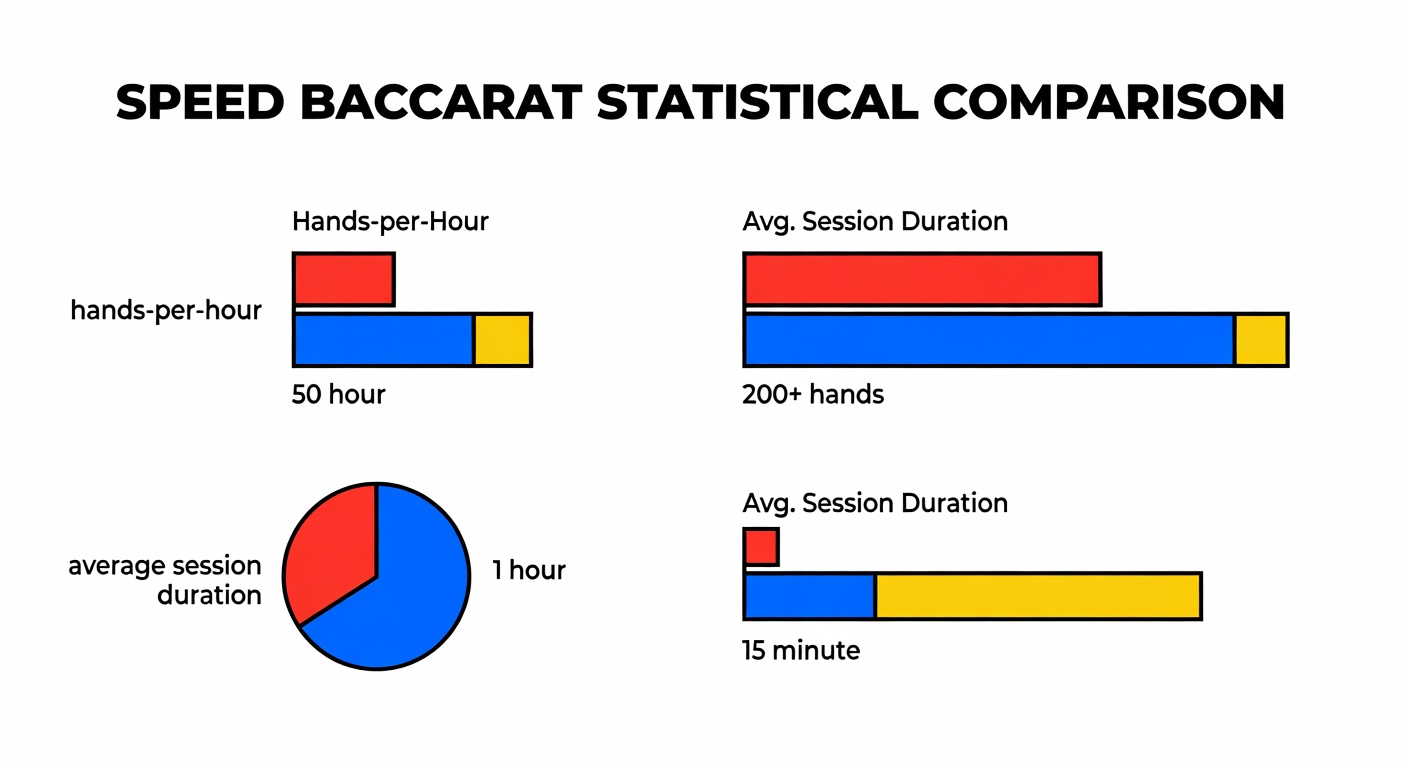
Speed Baccarat runs 50 hands per hour instead of 20. The math is the same but the psychological impact is different.
I sat at a Speed Baccarat table at a live casino yesterday (afternoon, hotel bar, the air was thick with something I couldn't name). The dealer moved through hands like he was on a timer (he was; the game is designed for maximum speed).
Fifty hands per hour. Standard baccarat does twenty. The difference is not trivial; it's the difference between watching a game and being consumed by one.
The house edge on Speed Baccarat is identical to regular baccarat (roughly 1.06 percent on Banker, 1.24 percent on Player). The odds don't change.
But your expected loss per hour increases proportionally. If you lose 1.06 percent at standard baccarat over 20 hands, you lose 1.06 percent over 50 hands at Speed Baccarat. Same percentage; 2.5x the hands; 2.5x the expected loss.
The Mechanics of Speed
How do they speed up the game?
Card dealing is instant (cards appear on screen; no physical shuffle animation). Betting time is reduced (60 seconds instead of 90). Result declaration is immediate (no dramatic pause).
The game loses its rhythm; it becomes mechanical. You place a bet. Instantly, a result. Instantly, the next round.
This continuous action has psychological impact. Your brain doesn't register the loss (you're moving to the next hand before loss has time to register). You're in a state of flow, which means you're not thinking clearly about what you're doing.
The Expected Loss Calculation
Assuming you bet $100 per hand, $1,000 per hour on standard baccarat, $2,500 per hour on Speed Baccarat.
House edge of 1.06 percent means:
- Standard: $10.60 expected loss per hour
- Speed: $26.50 expected loss per hour
Over 8 hours of play:
- Standard: $84.80
- Speed: $212
The difference is real money.
The Behavioral Trap
Speed Baccarat is designed to exploit a cognitive bias: time compression. If you think you've been playing for an hour but you've actually lost $212 instead of $85, you're operating with outdated information about your expected loss.
Your brain feels like it's been an hour (time passes normally). But you've played 2.5x as many hands.
This is not accidental design. It's intentional. The faster the game, the more money the casino makes, all else equal.
When Speed Baccarat Makes Sense
Speed Baccarat makes sense if you've set a time limit and you want to maximize the number of hands you play (for entertainment value, not for profit).
If you're going to play for 2 hours anyway, Speed Baccarat lets you play 100 hands instead of 40. You get more action for your time.
But the cost of that action is higher expected loss. You're not getting more action for less money; you're getting more action for more money.
The Psychological Experience
I watched people at the Speed Baccarat table. They had a glazed expression. Not happy, not sad, just... present. They were in a state I can only describe as gambling trance.
One woman played for 3 hours straight. She went through 150 hands (50 per hour). Her starting bankroll was $1,000. Her ending bankroll was $700.
Her expected loss, given the house edge and her bets, was roughly $150 to $200. She was slightly unlucky but within normal variance.
When I asked her if she realized she'd been playing 150 hands, she looked surprised. To her, it felt like she'd been playing for 20 minutes.
The Comparison
Standard Baccarat: meditative, slow, you have time to think about each bet.
Speed Baccarat: frenetic, automatic, you barely have time to think.
If you want to minimize your expected loss, play standard baccarat. The slower pace means you'll play fewer hands and lose less money.
If you want maximum entertainment value per hour, play Speed Baccarat. You'll lose more money but you'll have more hands to remember (or not remember, given the trance state).