

The Evolution of Las Vegas: From Railroad Town to Sin City
Las Vegas was a place to stop between Los Angeles and Salt Lake City. Then someone noticed there was money in the desert.
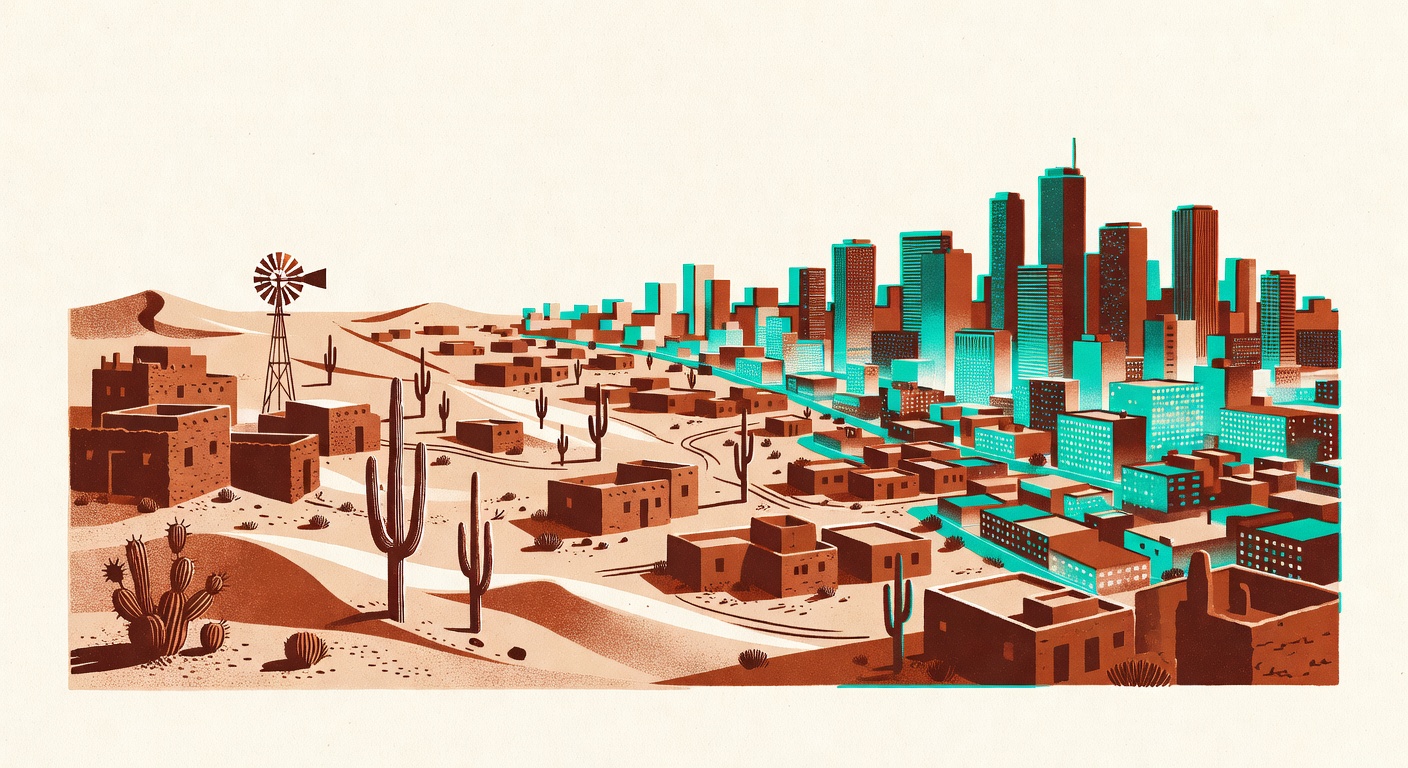
You have to start with 1905. Las Vegas was a railroad junction. The San Pedro, Los Angeles, and Salt Lake Railroad had a depot. The town existed to service the trains. Maybe a thousand people. Hotels for travelers who needed to stop. The trains brought gamblers, sure, but nobody was building a gambling economy around it.
In 1931, Nevada legalized gambling. Not because they wanted to. Because they needed the tax revenue. The Depression was on. Las Vegas was still small. But the legalization meant that what had been illegal was now legal. A few casino-saloons opened. The first serious casino was the Golden Nugget in 1946. Bugsy Siegel opened the Flamingo in 1946, which was supposed to be lavish and modern, and it was, and it lost money, and Siegel got shot.
The post-war years brought the real change. Air conditioning became standard in the 1950s. That sounds trivial until you realize that Las Vegas in summer is 120 degrees in the shade. Before air conditioning, you simply could not operate a casino comfortably. With it, you could run games 24/7.
Howard Hughes arrived in Vegas in 1966. He bought casinos. The Desert Inn, the Sands, the Golden Nugget. He modernized them. He established that a casino could be run like a business instead of a mob operation. This was not moral progress; this was professionalization. The business model became clearer: Build a large property. Offer games. Hotel rooms. Restaurants. Keep the customer in the building as long as possible.
Steve Wynn changed the aesthetic. The Bellagio in 1998. Suddenly Las Vegas was not about the back of a casino with a parking lot. It was about the front, the entrance, the spectacle. Wynn understood that you were not selling games; you were selling an experience.
The Mechanics of Exponential Growth
The growth was exponential after legalization because the business model solved a problem: what do you do with a lot of money and no place to hide? In a state like California, if you had money, you had to explain where it came from. In Nevada, if you had money, you could gamble it, and lose it, and nobody asked.
This is the crucial economic fact. Las Vegas became a money laundry before it became a tourist destination. Organized crime families used casinos to convert untraceable money into legitimate cash flows. You put a million in dirty money into a casino. You lose some of it. You launder the rest through the casino's legitimate operations. The casino's ledger shows money received from gambling.
This is not speculation. It is documented history. The Nevada Gaming Control Board was established in 1955 to try to prevent exactly this. It did not work. The mob ran Vegas until the 1970s.
The growth accelerated when tourism became the primary vector. People flew to Vegas. Not because they were laundering money but because they wanted to gamble. The mob realized that a casino full of tourists was more profitable than a casino full of organized crime associates and their money laundering schemes.
The 1980s and 1990s saw the transition to corporate casinos. The big companies (MGM Grand, Caesars, Bellagio) moved into Vegas. They brought professional management. They brought capital. They built larger properties, better amenities. The mom-and-pop casinos closed or were bought out.
The 2000s brought the Strip as a destination for non-gamblers. The Bellagio fountain, the Venetian gondolas, the Caesars Palace classical architecture. These are not casino features; they are tourism features. The games are just the excuse to get people to the property.
The Present Arrangement
Las Vegas in 2024 is a $45 billion annual economy. It is the most visited city in the US. The casinos are owned by major corporations (Caesars, MGM Resorts, Boyd Gaming). The games are nearly identical across properties. The differentiation is in the experience (the hotel, the restaurants, the shows).
The mob is gone. Professional management runs things. The Nevada Gaming Control Board enforces regulations. The growth has slowed from the exponential days, but the city is stable and profitable.
The moral arc is unclear. Las Vegas built itself on money laundering, mob violence, and exploitation of problem gamblers. It evolved into a corporate entertainment destination. The mechanism (offering games that favor the house) remains the same. But the structure (corporate instead of mob) is different.
What changed: In 1931, Nevada needed gambling revenue. In 1950, the mob needed money laundering infrastructure. In 1980, tourists wanted an entertainment destination. Today, Las Vegas is a destination that happens to offer gambling. The emphasis has shifted. The city has found legitimacy. The fundamental economics (the house edge, the player losses) remain constant.