

Richard Marcus: The Infamous Past-Poster and Casino Cheat
Richard Marcus walked into a Las Vegas casino in 1987 and stole 1.5 million dollars before the surveillance system could catch him. The method was simple. The preparation was not.
Richard Marcus was born in 1959 and grew up in California. He had no documented prior criminal history. He had no gambling background. He was a waiter, then a real estate appraiser. In 1987, at age 28, he walked into the Stardust Casino in Las Vegas. Within two years, he had stolen roughly 1.5 million dollars.
His method was past-posting: placing or modifying a bet after the outcome was determined but before the casino could detect it. This is the oldest casino cheat in the history of gambling. It is also one of the most difficult to execute because it requires precise timing, coordination, and intimate knowledge of casino procedures.
The Setup
Marcus did not work alone. He assembled a team of five to eight people. Each had a specific role. Some were spotters who watched the roulette wheel and memorized which numbers came up. Others were bet-modifiers who would adjust bets after the result was known. A third group were observation-blockers who would create distraction at the table to obscure the surveillance cameras' view.
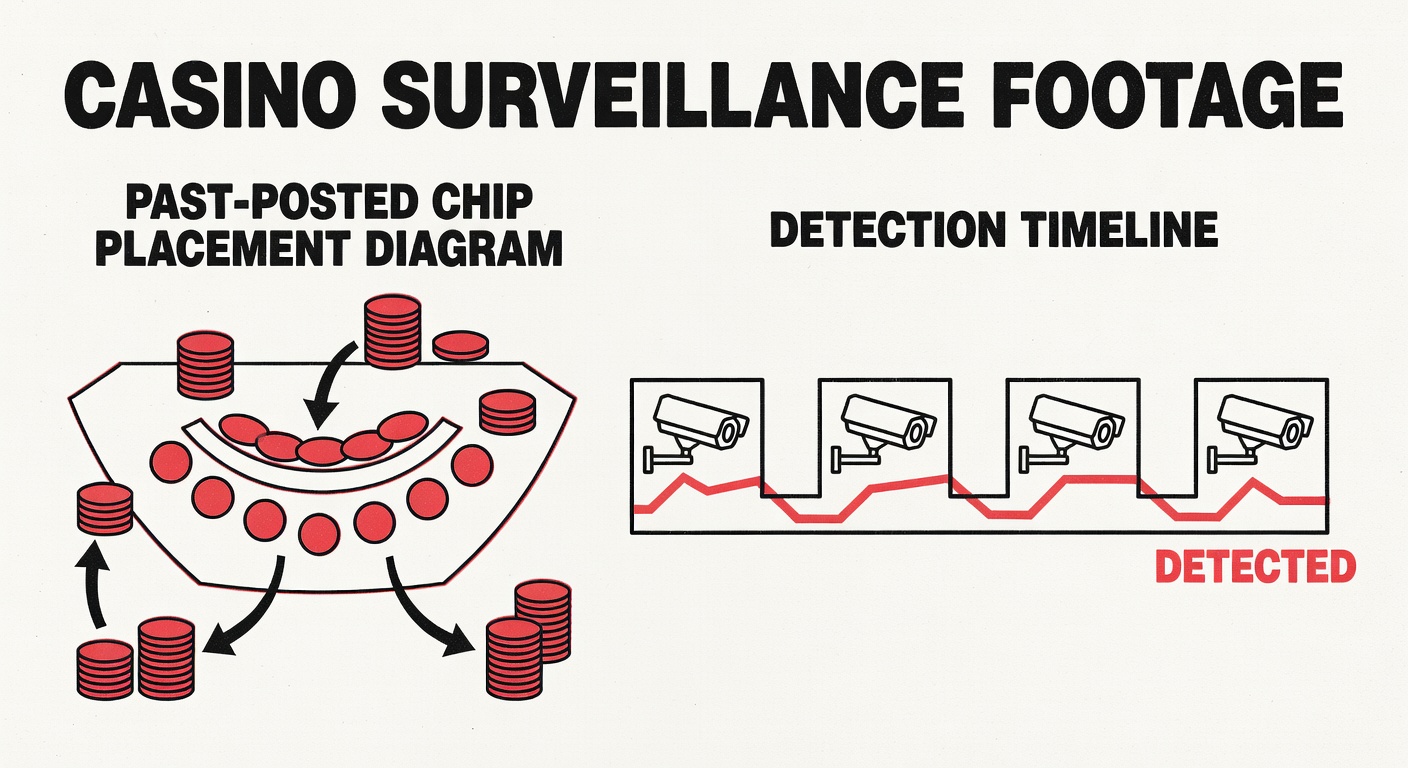
The target was roulette, primarily, because roulette has a short decision window. The ball spins. The dealer calls "no more bets." The ball lands. There is a 5 to 10 second window in which chips on the table have not yet been removed and new bets are not yet being placed. Marcus's team used this window to swap low-value chips for high-value chips on the winning spots.
Example sequence: the ball lands on 17. A spotter calls out "17" to the team. A modifier approaches the table and places a 1000 dollar chip on 17. The dealer collects the losing bets from the previous spin. The croupier sorts the chips from 17. The modifier's 1000 dollar chip is now mixed with the legitimate winning chips. The croupier does not notice (or is paid to not notice) that this chip was not on the table during the spin.
If the team did this 10 times per night, they could steal 2000 to 3000 dollars per night. Over two years, at multiple casinos, the total approached 1.5 million dollars.
How the Casinos Failed
Surveillance systems in 1987 were not digital. They were analog video tape. The resolution was low (240 lines of resolution versus 1080 lines on a modern camera). A camera could observe the general area of a roulette table but could not clearly distinguish a 1000 dollar chip from a 500 dollar chip at a distance.
Moreover, the surveillance room was staffed by people watching dozens of monitors simultaneously. A moment of inattention, a distraction at another table, a brief technical glitch, and the past-post would be missed.
Casino procedures in 1987 were also looser. Dealers did not verify the composition of chips on winning numbers with the same rigor. There was no computer system tracking every chip. There was manual accounting, which is error-prone.
Marcus also researched his targets carefully. He identified casinos with procedural weaknesses. The Stardust, where he conducted most of his early work, had renovation happening. The surveillance system was being relocated. During the transition, blind spots appeared. Marcus exploited them.
The Capture
Marcus was caught not through surveillance but through police investigation. In 1991, a casino began documenting losses that exceeded the statistical expected variance. They suspected cheating. They contacted the Nevada Gaming Control Board.
The Gaming Control Board (now the Nevada Gaming Commission) had an elite surveillance division. They reviewed decades of tape from multiple casinos. They identified a common pattern: the same faces appearing at different tables at different casinos, always positioned behind or near winning bets during the post-result window.
They identified Marcus through his associates. One associate was arrested on an unrelated drug charge and cooperated. Another was identified through his presence at multiple casinos across the same dates. Phone records showed communications between Marcus and the team.
In 1992, Marcus was arrested. In 1995, he was convicted of cheating. He served five years in federal prison.
What Changed After Marcus
Marcus's prosecution accelerated a shift in casino security. By 2000, surveillance systems were digital. Resolution had increased to 480 lines, then 720, then 1080. Multiple angles covered the same table. Every chip movement was recorded and could be reviewed frame-by-frame.
Casino procedures changed. Chips on winning numbers were verified immediately by the dealer and the pit boss before any payout. Winning chips were physically separated from the table and isolated until they were counted in a secure cage.
Many casinos moved roulette to automated systems. The wheel was electronic. The ball was released by the house. The landing spot was recorded automatically. No human dealer, no chip placement, no opportunity for past-posting.
Some casinos eliminated roulette entirely and replaced it with electronic roulette machines, which have the same mechanics but are dealt by the house entirely through software.
The Specific Lesson
Marcus's case is documented in court records, casino surveillance reports, and a book he published himself ("American Roulette") in which he detailed his methods. Law enforcement and casino security use his case as a teaching example.
The lesson is not "cheating is easy." The lesson is "cheating requires systematic preparation, team coordination, and intimate knowledge of procedures and blind spots." Casinos learned that their blind spots were real, and they eliminated them.
The second lesson is that past-posting is not a method available to casual players. It requires advance planning, team members in place, and institutional knowledge of how a specific casino operates. For a solo player, the risk exceeds the potential gain.
The third lesson is that casinos have adapted. Modern surveillance, modern procedures, and modern verification systems make past-posting virtually impossible at licensed casinos in regulated jurisdictions.
Richard Marcus became a minor figure in casino crime history not because his scheme was sophisticated, but because it was systematic. He did not try to cheat once. He built a franchise. That is what caught him. And his failure is why casinos now operate under the assumption that cheating is always possible, and that every procedure must be designed to prevent it.