

Poker Night TV: The Rise and Fall of Televised Poker on ESPN
Televised poker exploded in the 2000s on ESPN. By 2010, it was largely gone. The story reveals something about attention and gambling.
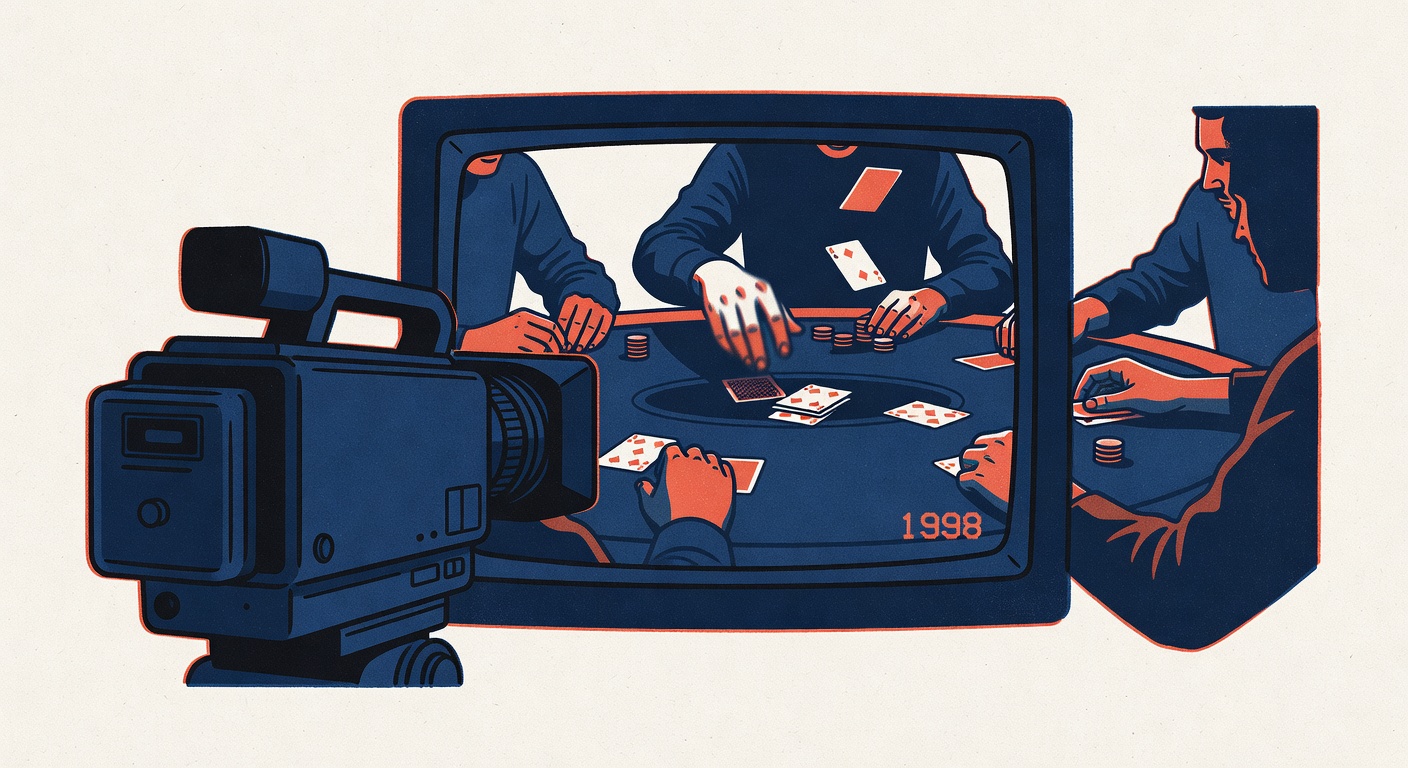
Televised poker emerged in the early 2000s as a content format. The World Series of Poker Main Event had always been televised, but it was a special event. What was new was the idea of regular, recurring poker on cable: the World Poker Tour, the European Poker Tour, cash game shows like "Poker After Dark."
ESPN had a weekly prime-time slot called "World Poker Tour." It aired 2005-2011, with reruns continuing beyond. The show featured tournament play with hole-card cameras, which allowed viewers to see the players' cards. This technology, combined with commentary, turned opaque decision-making into narrative.
The format was simple: watch poker professionals make decisions with incomplete information, then see the result. The viewer is in the privileged position of knowing all hands. The experience is engaging. A hand that looks bad becomes brilliant when the hidden cards are revealed.
Why It Worked
Poker on television succeeded because the format paralleled sports. It had drama (will the aggressive player's bluff work?), it had characters (recognizable players with distinct styles), and it had a climactic moment (the winner is crowned). The hole-card camera made the poker visible in a way that live poker is not.
The peak was 2006-2008. The World Series Main Event final table drew 2.2 million viewers in 2008. Poker books topped bestseller lists. Poker players became celebrities. Online poker exploded as people wanted to play the game they saw on television.
But the peak was not the whole story.
The Decline
By 2010, poker viewership was dropping. World Poker Tour averaged 600,000 viewers. The World Series final table was still watched, but the decline was visible. By 2012, ESPN had effectively phased out regular poker programming except for the World Series.
Why? Several factors. First, poker is slow. A single hand in a tournament can take 10 minutes of deliberation. Television needs pacing. Edited poker highlights work. Live poker does not.
Second, online poker crashed in 2006 with the Unlawful Internet Gambling Enforcement Act. This removed the referral effect: fewer casual players meant fewer people interested in watching poker on television.
Third, poker content fractured. Instead of ESPN-curated poker, viewers could find poker streams on Twitch, YouTube poker channels, and poker podcasts. The centralized media had been disrupted by decentralized content.
Television poker required passive consumption. Modern poker viewers want to interact, fast-forward, and choose their level of engagement.
Fourth, there was selection bias in late televised poker. The final tables were all professionals. No amateurs. The magic of early poker on television was that an accountant from Ohio could win the World Series main event. By 2010, the top tournaments were dominated by professional players. The narrative became less compelling: of course the professionals won.
The Legacy
Televised poker had a genuine impact on the game. It popularized poker, brought casual players to the table, and created a generation of players who learned poker partly through television commentary.
But television as a medium for poker was a temporary match. The game required a format that television could not sustain: editing would misrepresent the decisions, live broadcasts were slow, and recorded broadcasts could not compete with the decentralized alternatives that emerged.
The Monkersolver generation learned poker from YouTube, Twitch, and podcasts, not from ESPN. The format changed, but the game remained.