

Jack Binion and the Family Behind the World Series of Poker
Jack Binion inherited more than a casino. He inherited a ritual that would reshape competitive poker. The story of how a gambling family built something that outlasted them.
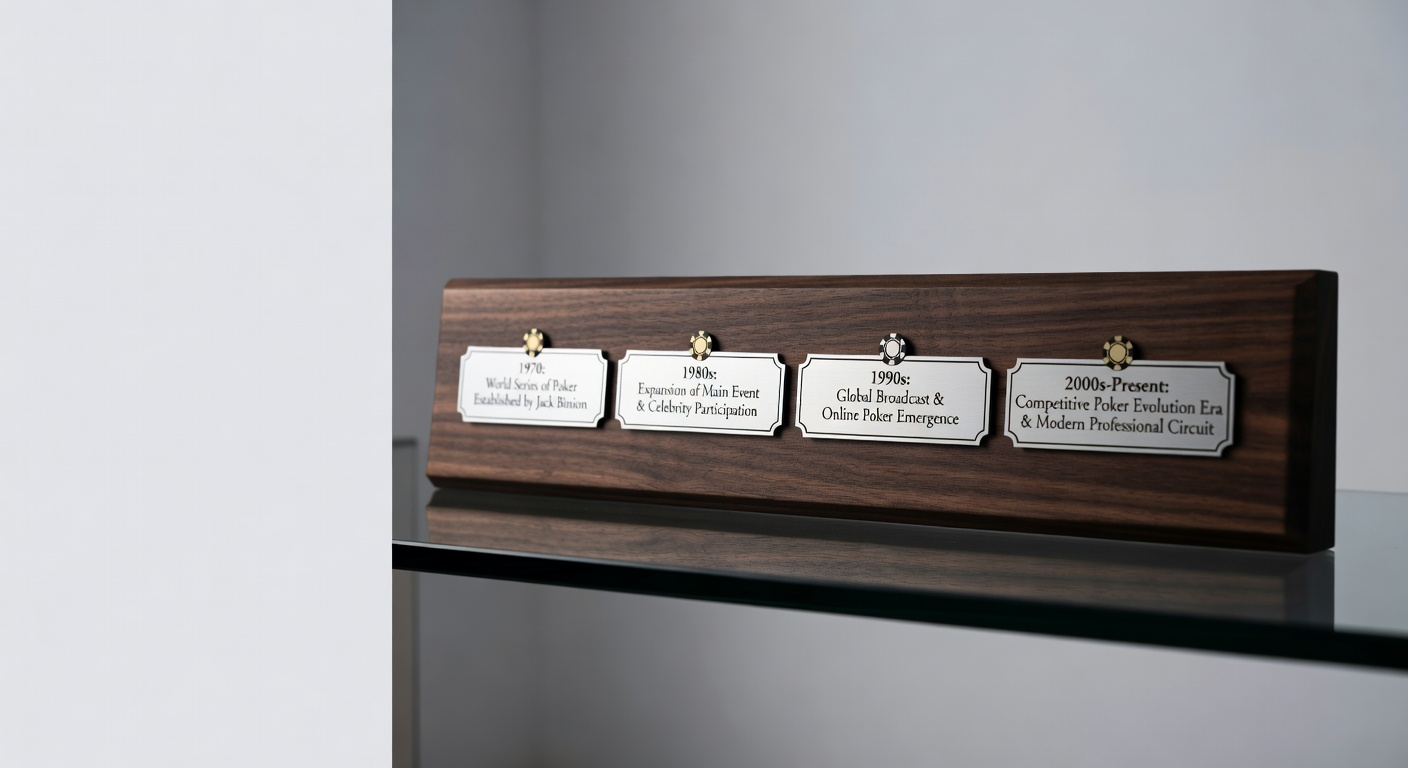
The Binion name meant something inside card rooms long before the WSOP existed. Jack's father Benny had run Binion's Horseshoe since the 1950s, a place where the air was thick with cigar smoke and the unspoken rule that a man's word was his bond. Dealers could read a bettor by the way he exhaled. The city was Las Vegas, but the culture was something older: frontier capitalism mixed with Southern honor codes.
When Jack took over the casino in the 1980s, he faced something his father had not. Poker had changed. The game had money now, serious money, national money. CBS had shown a World Series of Poker event on tape delay. Players were starting to think of themselves as athletes, not just gamblers.
The Making of a Ritual
The World Series had been Benny's creation in 1970. It started as a gathering. No fancy structure, no sponsorship, no television cameras. A handful of the best players in America showed up at the Horseshoe because Benny said they should. They played freeze-out tournaments and side games that stretched across days. The winner was crowned in an announcement that took ten seconds.
Jack understood something his father had intuited: the ritual had become the thing. Players did not come just to win money. They came to be seen, to test themselves, to participate in something that felt like it mattered. The WSOP was becoming a pilgrimage.
Under Jack, the series expanded. More events. More structure. But the core remained untouched. A player could still show up with $10,000 and win the main event bracelet. The democracy of the game was sacred to him. He raised the ante of the World Series not by making it harder to enter, but by making it harder to win.
The Ethnographer's Eye
What struck an observer was not the glitz. The Horseshoe had always been a working man's casino, not a resort. What struck you was the hierarchy of the felt. A former dentist might sit down next to a professional who had been grinding the same game for thirty years. The professional moved different. Slower breath. Tighter face. A particular kind of patient silence.
Jack knew these men. Not by their names always, but by how they played. He could walk the floor and see someone sitting in a high game and nod. He understood that the game itself was a form of communication, that how a man bet revealed what he believed about the world.
The Binion family had built something unusual: a casino where the primary game was not designed to favor the house over time. Poker is a player-versus-player game. The Horseshoe took a rake, a percentage of each pot, and left the outcome to skill and luck. This was different from slots or blackjack. It was a platform, not a product.
The Succession and Its Costs
Jack ran the WSOP for three decades. He made decisions that shaped the game's culture. When a player was caught cheating, Jack banned him. Permanently. The word got out. The WSOP became known as a game where your skill and your character mattered.
But the Binion family itself fractured. There were robberies. There were feuds between siblings. There was a death. The casino changed hands multiple times over the years. The family business that had been built on personal honor could not survive the inheritance wars.
By 2004, the WSOP left the Horseshoe. The event moved to the Rio All-Suite. The thing that Jack Binion had stewardarded was now too big to contain within a single casino. It had become an institution larger than any one family.
What remained was a paradox: the World Series of Poker exists because the Binion family treated it not as a profit center, but as a cathedral. They maintained it with the care you would give to something sacred. And because they did, it survived their own dissolution. The game outlasted the family that made the game.