

Why Hole Carding Is Different From Card Counting
Hole carding is cheating. Card counting is not. But the casinos treat them the same. The legal difference is clear. The operational difference is sharper.
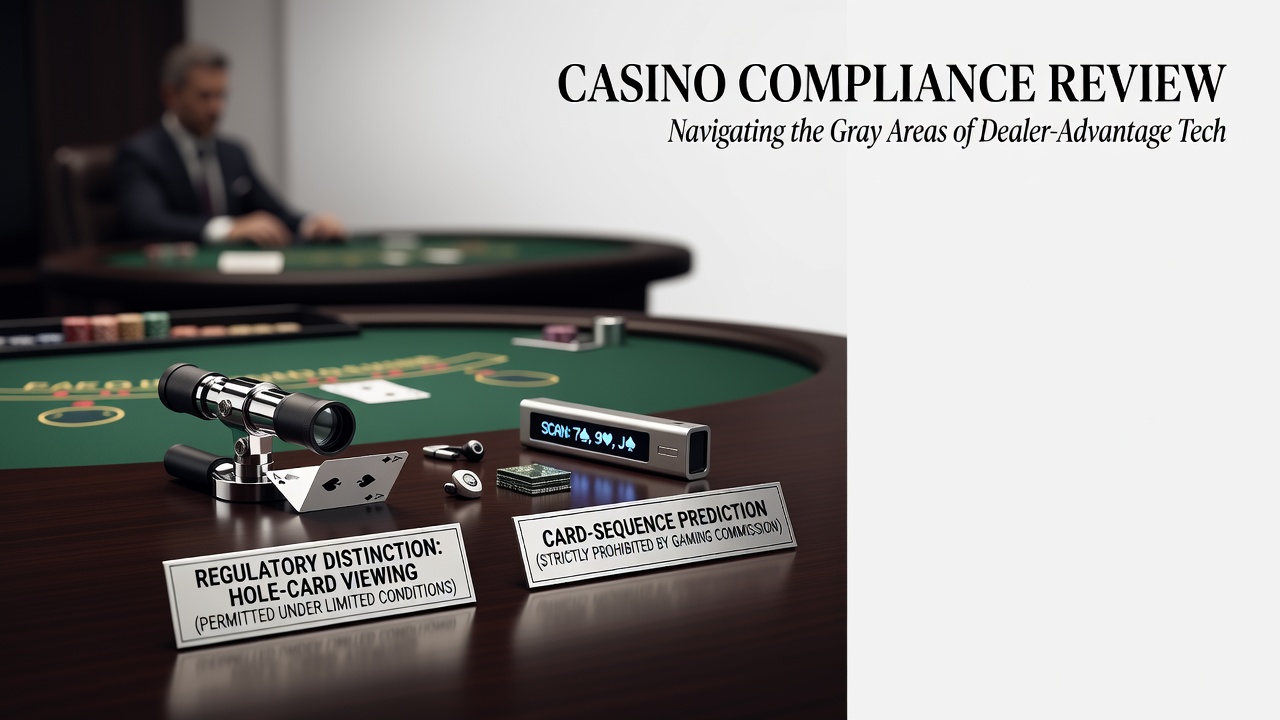
The Distinction
Card counting is a technique where you mentally track the composition of remaining cards in the deck based on what has been dealt. You use this information to adjust your bet size and decisions. The mechanism is mental. It requires no external tools. It is legal. Casinos hate it, but they cannot prosecute it.
Hole carding is seeing your opponent's cards before the decision is made. In blackjack, the dealer's hole card (the card face-down). In poker, someone else's hand. In baccarat, nothing because baccarat has no hidden cards. The mechanism is observation of cards that are meant to be hidden. It is illegal. Casinos can and do prosecute it.
Why Card Counters Rarely Go to Prison
A card counter's activity is mental. There is no evidence except the counting itself and the results. A prosecutor cannot examine the inside of someone's head. They can show that a person bet more when the count was favorable, but that is not proof of counting. It is consistent with luck or intuition or random variation.
Card counters get banned from casinos. They do not go to prison because the activity is not illegal. Nevada law explicitly protects the right to count cards. The casino's response is exclusion from their property, not criminal prosecution.
Why Hole Carders Do Go to Prison
A hole carder's activity leaves evidence. They see a card that is meant to be hidden. The seeing requires some mechanism: a mirror, a reflection in a glass, a peek at an angle, an accomplice looking over the dealer's shoulder. The mechanism is observable. The illegal access to information can be documented. Prosecution becomes straightforward.
Hole carders are convicted of cheating, which is a criminal offense in most jurisdictions. Sentences vary. Minor cases might result in probation and casino bans. Major cases (organized hole-carding rings) result in prison time.
The Operational Difference
A card counter plays alone, with publicly available information (the cards dealt), and mental processing. A hole carder requires either special equipment or positioning that the casino does not expect. The operational requirements are different. Card counting is an intellectual activity. Hole carding is a logistical activity. This is why card counters have had multi-year runs at casinos before being identified. Hole carders typically last weeks or months before someone notices the anomaly.
Why Casinos Treat Them the Same
Casinos ban card counters not because the activity is illegal, but because it affects their revenue. A card counter has a mathematical advantage. The casino's response is exclusion. A hole carder also has an advantage, but it is obtained illegally. The casino's response to both is the same from an operational standpoint: identify and remove the person from the property.
Casinos do not distinguish between legal and illegal advantage players in terms of urgency. Both reduce house revenue. Both must be removed. The casino's surveillance team is not looking to distinguish the legal from the illegal. They are looking for anyone whose wins suggest they have information they should not have.
The Public Record
Card counting prosecutions are rare and usually unsuccessful. The most famous case involved MIT students playing blackjack, documented in a book and film. The students were not prosecuted. They were banned.
Hole-carding prosecutions are more common. Documented cases include: Las Vegas dealers working with hole-carders and receiving cuts of winnings (multiple prosecutions in the 1980s-1990s), organized rings in Atlantic City involving corrupt dealers, and international cases involving high-limit games.
The Philosophical Difference
One might argue that card counting is using your brain to process public information. The information is available to everyone. The application of skill is legal. Hole carding is obtaining private information illegally and using it. The information is hidden intentionally. The obtaining is the crime.
The casinos' practical response collapses this distinction. Both advantage players are removed. Both represent lost revenue. But the legal system treats them very differently. One is civil exclusion. The other is criminal prosecution. Understanding the difference matters if you are playing edge games at a casino. The line between legal advantage play and illegal cheating is sharper than most people realize.