

The History of Live Dealer Gaming: From Studios to Streaming
Live dealer gaming is a category of remote gambling in which a physical human dealer operates real casino equipment, with the video stream relayed to the player's device in real time. This piece traces how the category came into being and why it matters from a regulatory standpoint.
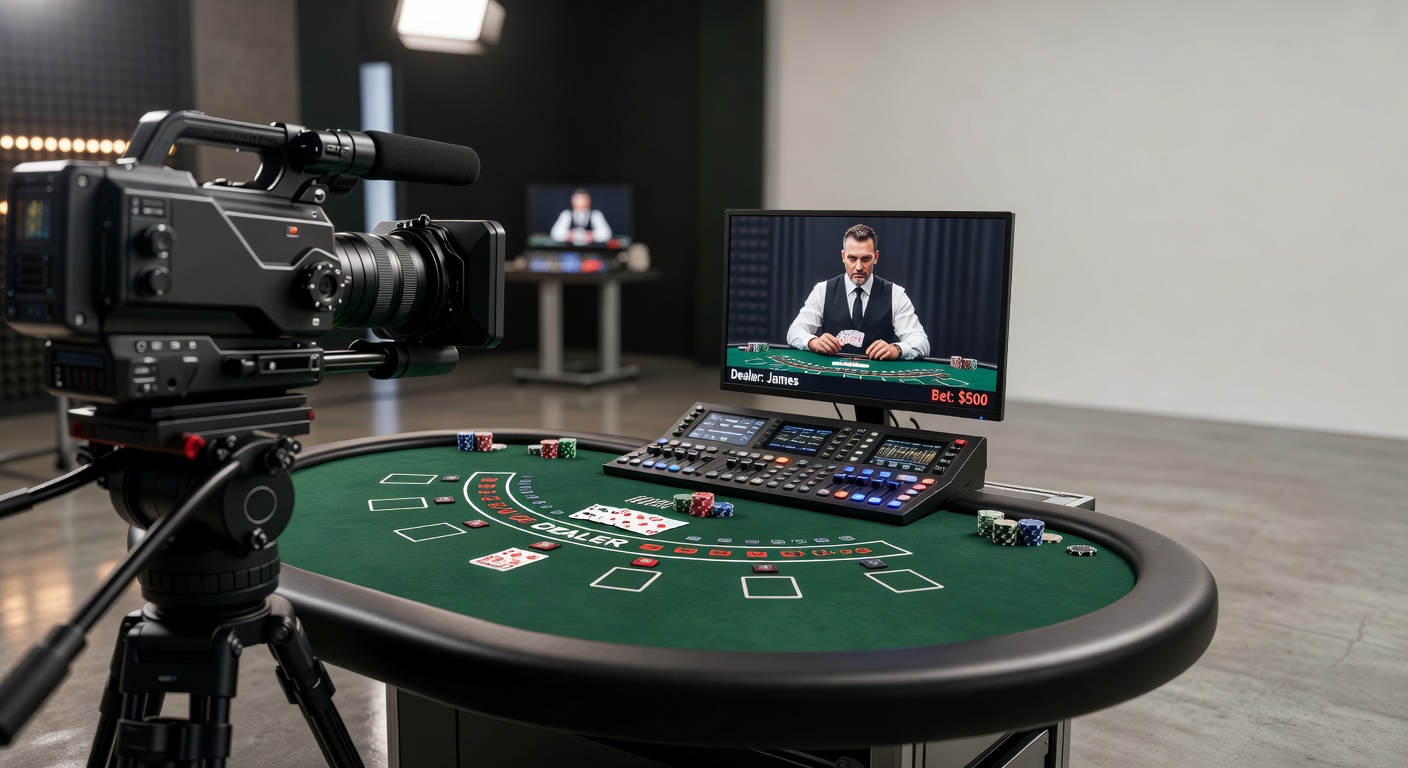
Live dealer gaming refers to a category of remote casino product in which a physical dealer operates real gaming equipment, with the resulting audio and video stream transmitted to the player's device in close to real time, and in which the player's wagers are reconciled against the outcomes produced by that physical equipment rather than by a random number generator.
That is the working definition. The history of how the industry arrived at that definition, over roughly two decades, is the subject of this piece.
The Problem That Live Dealer Was Built to Solve
In the late 1990s and early 2000s, online casinos offered exclusively RNG-based products. These were, and remain, lawful in most licensed jurisdictions. However, operator market research from that period consistently identified a subset of customers who declined to play online casino products because they did not trust the random number generator. Accordingly, a commercial opportunity existed for a product that preserved the remote-access convenience of online casinos while providing a transparent, visible game outcome.
This is the problem live dealer was designed to solve. It is, in practice, as much a trust mechanism as a gameplay innovation.
The regulatory framing matters here. In jurisdictions such as Malta, Isle of Man, and certain Caribbean territories, RNG products had been licensable from the late 1990s. A live dealer product introduces additional considerations: the physical premises must be inspected, the equipment calibrated, the staff background-checked, the video stream integrity assured. Therefore the regulatory footprint is larger. Therefore the category was slower to emerge.
The First Generation: 2003 to 2006
Playtech launched what is commonly cited as the first commercial live dealer product in 2003, broadcasting from a studio in a licensed European jurisdiction. The offering was limited in scope: baccarat, roulette, and a small number of tables. The technology was primitive by current standards. Latency was high, image quality was low, and the user interface required a persistent broadband connection that a minority of residential users actually had at the time.
Accordingly, uptake was modest through 2004 and 2005. Operators who offered live dealer reported that it represented under 5 percent of total casino gross gaming revenue. Live dealer was, in this period, a niche product for a small sophisticated subset of customers.
Several factors then changed. Residential broadband penetration crossed 50 percent in most relevant markets by 2006. Video streaming technology, particularly the Flash-based streaming stack of the period, became cheaper and more reliable. And importantly, a new competitor entered the market.
Evolution Gaming and the Category's Takeoff: 2006 to 2014
Evolution Gaming was founded in 2006 in Stockholm. Its initial offering was a white-label live dealer service for operators who did not wish to build their own studios. By 2008 it had opened a dedicated studio in Riga, Latvia. By 2014 it held a commanding share of the global live dealer market and had begun to define what the category looked like.
In regulatory terms, Evolution's contribution went beyond the technological. It was also organizational. The company demonstrated that a live dealer studio could be operated as a shared utility, licensed in one jurisdiction, serving operators licensed in many other jurisdictions under suitable bilateral arrangements.
In practice, this meant that a small Isle of Man operator could offer a live dealer table to its customers without building a studio itself. The studio was elsewhere, operated by a supplier, under a supervisory framework recognized by the operator's home regulator. This separation of studio operation from customer-facing operation has become the industry's default architecture.
Therefore, a reader should understand that the typical live dealer table seen today is the product of at least three licensed entities: the studio operator, the customer-facing casino operator, and the regulator of each. Accordingly, disputes about outcomes, fairness, or compliance involve all three parties.
The Move to Game Shows and Branded Content: 2014 to 2019
Until roughly 2014, live dealer content consisted of live versions of traditional casino games: blackjack, roulette, baccarat, and a few poker variants. The innovation in this period was primarily in presentation quality rather than in format.
From 2014 onward, suppliers began experimenting with formats that had no direct casino analogue. Evolution's Dream Catcher, launched in 2017, was a money-wheel format that would have been familiar to a fairground visitor in 1950 but had never previously been available as a live casino product. It was followed by Monopoly Live, Deal or No Deal Live, Crazy Time, and similar productions.
These formats are, from a regulator's point of view, hybrid products. They combine a live physical element (a human host, a spinning wheel) with RNG-driven augmented reality overlays and bonus rounds. Accordingly, they require a licensing assessment that covers both the physical equipment and the software-driven elements. The compliance frameworks of most major European regulators were updated between 2017 and 2020 to explicitly address these hybrid formats.
The Pandemic Period and Streaming at Scale: 2020 to 2022
The COVID-19 pandemic had a material impact on the category. Land-based casinos were closed for extended periods in most jurisdictions. Online casino gross gaming revenue increased across the industry. Live dealer, as the closest online equivalent to a land-based experience, was a disproportionate beneficiary.
In parallel, the infrastructure requirements of live dealer scaled up. Studio operators opened or expanded facilities in Bucharest, Malta, New Jersey, Pennsylvania, and elsewhere. The United States market, which had been effectively closed to live dealer until individual state regulators approved the category in the late 2010s, became a significant contributor by 2022.
For compliance teams, this period introduced new obligations. Jurisdictional segmentation became more complex. A New Jersey player must be served from a New Jersey-licensed studio, not a European one. Geolocation, session authentication, and camera audit trails became standard regulatory requirements.
The Current State of the Industry
A reader should understand the current live dealer industry as having the following structure.
- A small number of major studio operators: Evolution, Pragmatic Play Live, Playtech, Ezugi (now part of Evolution), and a handful of smaller specialists.
- A larger number of customer-facing operators who license studio content, either through direct integration or through aggregator platforms.
- A jurisdiction-specific regulatory framework in each market, which determines where the studio may be located, what games may be offered, and what compliance checks apply.
- A content mix that spans traditional table games, game-show formats, and in some markets branded content tied to external intellectual property.
The category has grown from a novelty product in 2003 to a material contributor to most licensed operators' revenue by 2024. Industry analyst H2 Gambling Capital estimated that live dealer accounted for approximately 25 to 30 percent of the global online casino gross gaming revenue in 2023, though the exact figure varies by jurisdiction.
What This Means for the Reader
In practice, a player engaging with a live dealer table is participating in a product with a longer regulatory history than is sometimes assumed. The table is not a novelty. It is the output of a supply chain that involves multiple licensed entities, multiple regulators, and accumulated operational standards that have developed over the past twenty-plus years.
Accordingly, if a dispute arises about an outcome, the player's recourse is not limited to the customer-facing operator. The studio operator, and the studio's licensing regulator, also have responsibilities. The compliance architecture is designed to make those responsibilities discoverable.
This is, ultimately, the point of the history. The product the player sees is simple. The regulatory apparatus that allows it to exist is not.