

Elvis in Vegas: The Jumpsuit Era and Casino Entertainment, 1969-1976
Elvis Presley transformed the Las Vegas casino showroom from a venue into an institution. The economics of that transformation reveal how celebrity capital flows through gambling.
Elvis Presley's relationship with Las Vegas began in 1956, when he was refused entry to a major casino. By 1969, the industry had reconsidered. On July 31, 1969, he opened a 57-day residency at the International Hotel (later renamed the Hilton). He was paid $500,000. He performed 636 shows over those eight weeks. The ticket prices, which had ranged between $10 and $25 for major entertainers, were pushed to $35 for Elvis. The casino was full every night.
What occurred in that period was not merely entertainment. It was the professionalization of celebrity gambling culture. Before Elvis, Las Vegas casino showrooms were venues. A performer came to town, performed for a week, and moved on. The Rat Pack (Sinatra, Dean Martin, Sammy Davis Jr.) had established the model of longer residencies, but they remained transient.
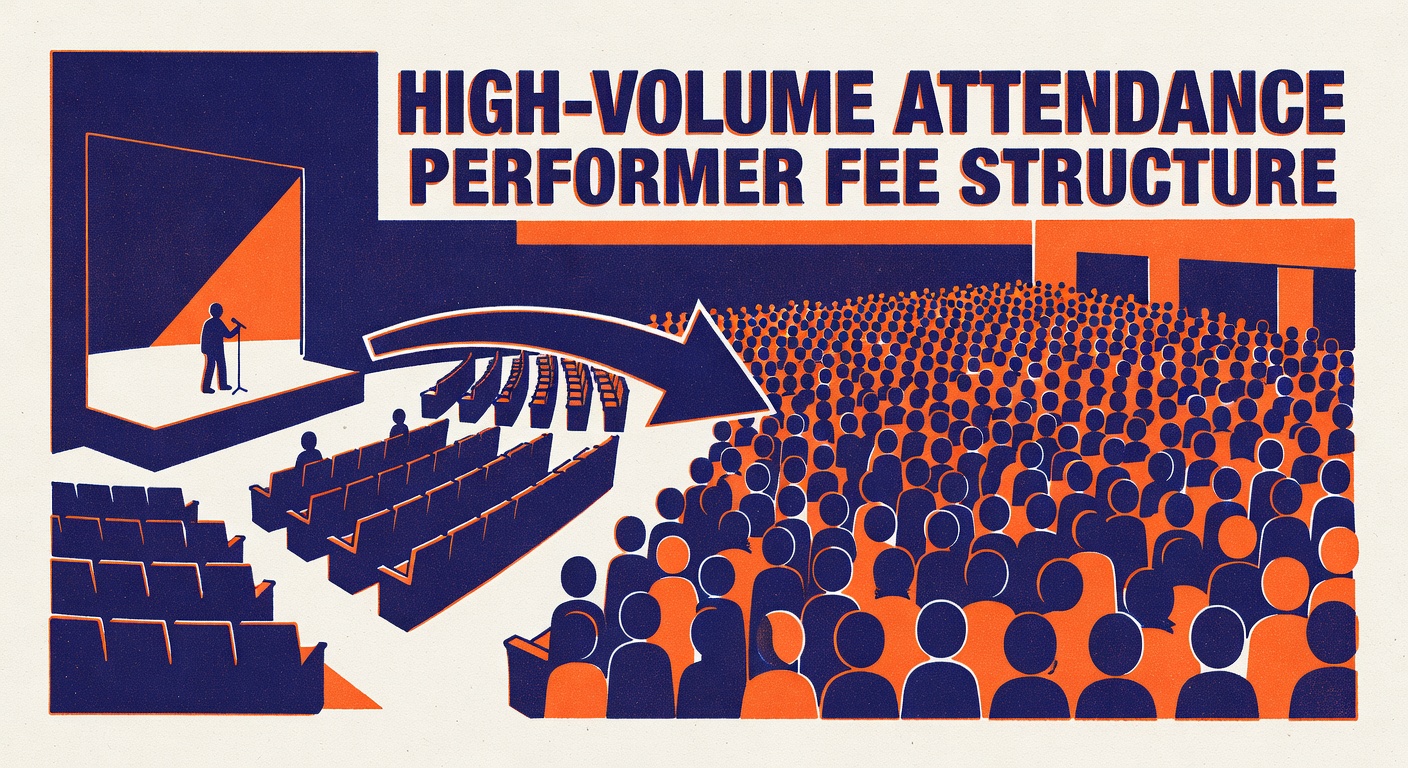
Elvis was different because his appeal extended beyond the showroom. He drew customers who would have otherwise gone to Los Angeles or not traveled for entertainment at all. The International's owner, Kirk Kerkorian, understood the mathematics: a four-week Elvis residency would attract 100,000 people to the property. Of those, 80,000 would spend money in the casino, averaging $300 to $400 per visit. The casino revenue from Elvis spectators was estimated at $12 to $15 million per residency. The cost to the hotel was the performer's fee ($500,000) and the opportunity cost of filling the theater with high-margin customers instead of low-margin customers.
Kerkorian calculated that he was willing to pay Elvis half a million dollars because the casino expected to gross $12 million from people who came to the property to see him. The math worked because Elvis brought an audience that the casino could capture.
The Jumpsuit Era
Elvis's first performance at the International was in the traditional suit and tie. By his second residency, in 1970, his wardrobe had shifted. He was wearing custom-designed jumpsuits, many created by Bill Belew. The jumpsuits became iconic. They were extravagant, sometimes adorned with jewels and chains. A single costume cost $500 to $1,000 to produce.
The jumpsuit served multiple functions. Visually, it distinguished Elvis from every other entertainer performing in Vegas. Functionally, it was designed for the stage. The American Television and Radio Archives recorded that Elvis's perspective was that "the suit should move with the man, not against him." But there was also a symbolic purpose: the jumpsuit positioned Elvis as a performer, not a civilian. It established him as a figure larger than the setting.
The casino understood the value immediately. By 1971, other performers were attempting variations on the jumpsuit concept. Liberace, who had been performing in Las Vegas since the 1940s, shifted his wardrobe toward more elaborate designs. The Las Vegas showroom had entered an era of costume escalation.
Between 1969 and 1976, Elvis performed seven major residencies at the International/Hilton. Each residency lasted four to six weeks. His fee rose to $750,000 by 1973. The casino recalculated the revenue: the showroom now generated $1.2 to $1.5 million in direct ticket revenue (at $35 per ticket, with 2,000 seats and near-total occupancy), plus the casino margin, estimated conservatively at $10 to $12 million per residency.
By 1976, other Las Vegas properties were recognizing that major performers were not amenities. They were profit centers. The Stardust signed Sinatra for a long-term residency. The MGM Grand, which opened in 1973, was designed specifically with a 2,000-seat main entertainment venue. Entertainment had moved from "something we offer to fill rooms" to "the primary reason people come to this property."
The Institutional Shift
What Elvis accomplished, perhaps unintentionally, was the transformation of celebrity gambling culture from a luxury to a necessity. Before 1969, a casino could operate successfully with conventions, tour groups, and local gamblers. After Elvis, the presence (or absence) of major entertainment became a competitive metric. Properties without significant performers lost customers.
The economic data bears this out. The Las Vegas convention and visitor authority reported that total gaming revenue per visitor rose from $42 in 1969 to $67 in 1975. That increase correlates directly with the expansion of major performer residencies. People who came to see Elvis spent more in the casino because they were there longer, because they were in a better mood, and because the property had invested in making the overall experience more compelling.
Elvis performed his final Las Vegas show in December 1976. He died in August 1977. His relationship with the city lasted eight years and generated, by conservative estimate, $100 million in casino revenue (in 1970s dollars). The cost was $3 to $4 million in performer fees, plus marketing and costume expenses.
The legacy is architectural and economic. Every modern Las Vegas casino has a large entertainment venue because Elvis's presence proved that entertainment is not overhead. It is profit. The jumpsuit is now part of the visual language of Vegas luxury. The model of a performer doing a four-week residency rather than a single night became standard. Contemporary performers like Adele, Carrie Underwood, and Celine Dion command fees exceeding $1 million per residency because the properties understand, still, that the math Elvis established in 1969 is correct.