

Decentralized Poker: Can Blockchain Replace Traditional Poker Rooms?
I have dealt cards under glass chandeliers in rooms where a single hand moved $500,000. The question now is whether code can replace me.
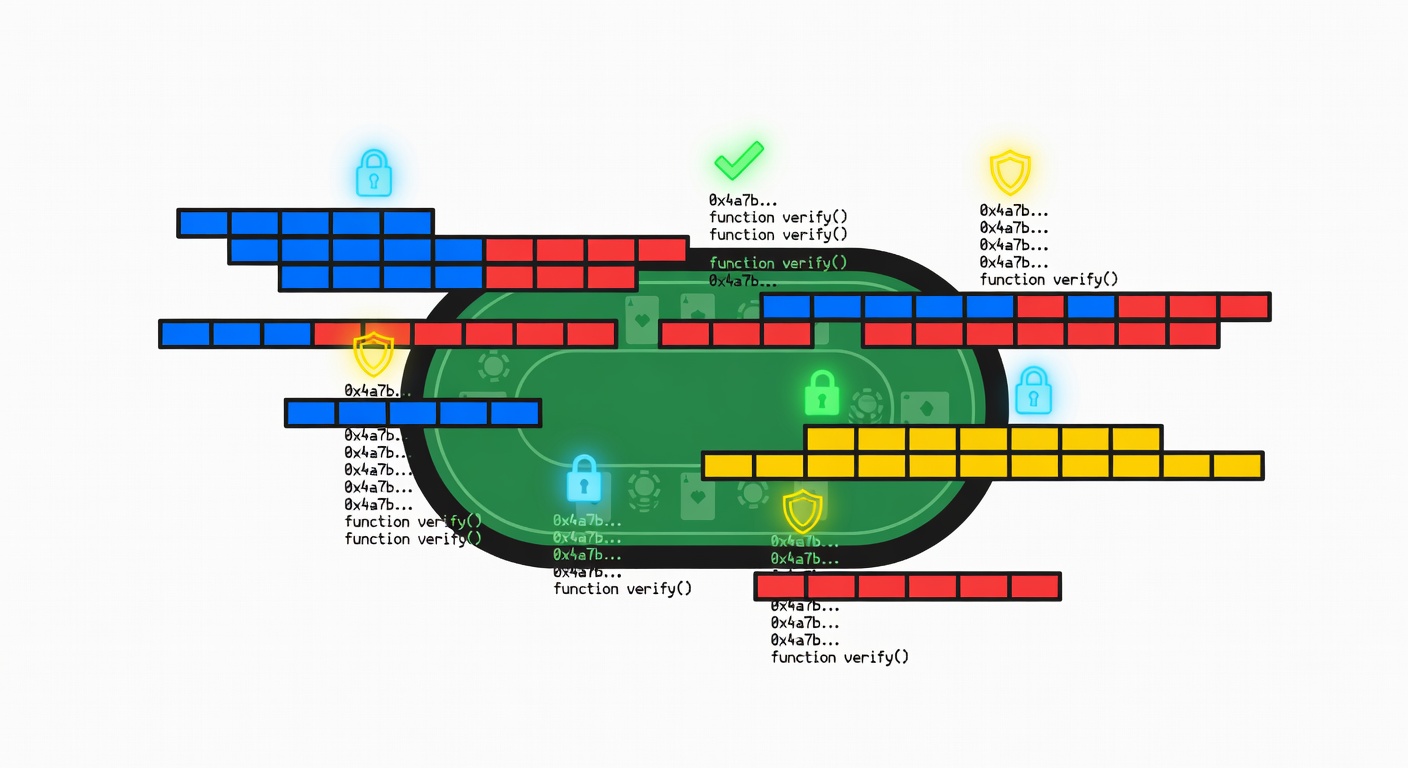
The bead-plate is a small device on the edge of the baccarat shoe. It marks the result of each hand. Red or blue. Player or banker. You move it. You read it. The players watch. It is ritual, and ritual is what separates a high-limit room from everything else.
Decentralized poker exists. It runs on Ethereum. There are no dealers. The cards are dealt by algorithm. The money moves by contract. The house takes its rake off the top.
But can it replace a room like the one where I work?
What Decentralized Poker Actually Is
Decentralized poker platforms use smart contracts to manage the game. A player deposits cryptocurrency. The contract holds the funds. The player joins a table. The algorithm shuffles a deck using a verifiable random function. Cards are dealt.
When the hand ends, the contract calculates the winner and distributes funds. The house rake (typically 2 to 5 percent) is deducted. The remainder goes to the winners.
Platforms like Poker.org and Hustler Casino attempt this model. None have achieved the scale of traditional rooms.
The advantage is obvious: no human dealer required. No central company controlling the game. Transparent code instead of opaque rules.
The Problem of Provable Fairness
In a traditional room, a dealer follows protocols. Two-deck shoe, cut card placement, card exposure, shuffle requirements. Surveillance cameras record everything. An independent auditor can review the video and verify that the dealer followed protocol.
This is how we verify fairness in a human game.
In a blockchain poker game, fairness depends on code. The shuffle algorithm must be verifiable. The card dealing must be cryptographically secure. The random number generator must be provably random.
The smart contract is public, meaning anyone can read the code and verify it. But most poker players cannot read code. They must trust either the developer or an auditor.
In practice, this creates a different trust assumption. Instead of trusting a dealer and surveillance, you trust a developer and an auditor. The trust is distributed but not eliminated.
The Liquidity Problem
A poker room with dealers can run 50 tables simultaneously. Each table seats 6 to 9 players. A well-run room can accommodate 300 to 400 active players.
Decentralized poker platforms have struggled to maintain liquidity. The largest platforms might have 30 to 50 players active at any given time, usually spread across 2 to 5 tables.
Liquidity matters because a player might want to play in a $10/$20 game with four other skilled players. But if the platform has only two players interested in $10/$20, the game cannot run.
Traditional rooms solve this by operating a rake (the incentive for players to come back) and offering consistent scheduling. A player knows they can show up Tuesday night and find a $10/$20 game running.
Decentralized platforms cannot offer this consistency without a central operator.
The Regulatory Wild West
Traditional poker rooms operate in regulated jurisdictions. The Kahneman rules of Nevada poker are specific. The UK Gambling Commission oversees online poker in the UK. Malta's MGA regulates poker operations in Malta.
Decentralized poker platforms often run with no regulation. The Curacao eGaming Authority has issued some licenses, but enforcement is minimal.
This lack of regulation creates two problems. First, player protection is minimal. If funds are frozen due to a smart contract bug, there is no regulator to appeal to. Second, the platforms cannot operate in major markets. A US player using a blockchain poker platform is technically breaking US law.
Why I Will Not Be Replaced
The psychological experience of poker is not purely mathematical. It is performance. A dealer at high limits understands the table. You know when a whale is running bad and needs the game to feel perfect. You know when to keep talk to a minimum. You know how to move the game at the right pace.
A smart contract cannot do this. It has no discretion. No judgment. No ability to read the room.
Second, human dealers provide narrative. They are witnesses. They remember hands. They carry stories. The game has a history because the dealers remember it.
A blockchain recording of a hand is immutable but meaningless. It is just data. A dealer's memory is fallible but meaningful. It is part of the culture of the game.
Third, the highest-limit games depend on trust between the players and the operator. The players are wagering hundreds of thousands of dollars. They need to know that the operator will protect them, that their money is safe, that disputes will be settled fairly.
No code can provide this assurance. Only a human being can.
What Decentralized Poker Might Become
Decentralized poker will likely find a niche. Players who value transparency and anonymity will use platforms that run on-chain. The liquidity will remain low. The games will remain small.
But they will not replace traditional rooms because they cannot solve the liquidity problem without introducing centralization. And if they introduce centralization, they lose their core advantage.
The question "Can blockchain replace traditional poker rooms?" is a technical question with a human answer. Yes, from a pure game-mechanics perspective. No, from an experience perspective.
I will deal cards as long as there are games to deal.