

Ashley Revell: The Man Who Bet His Life Savings on Red
April 19, 2004. Ashley Revell, 32, walked into the Plaza Casino with $135,300. One hand on red. One spin. All of it.
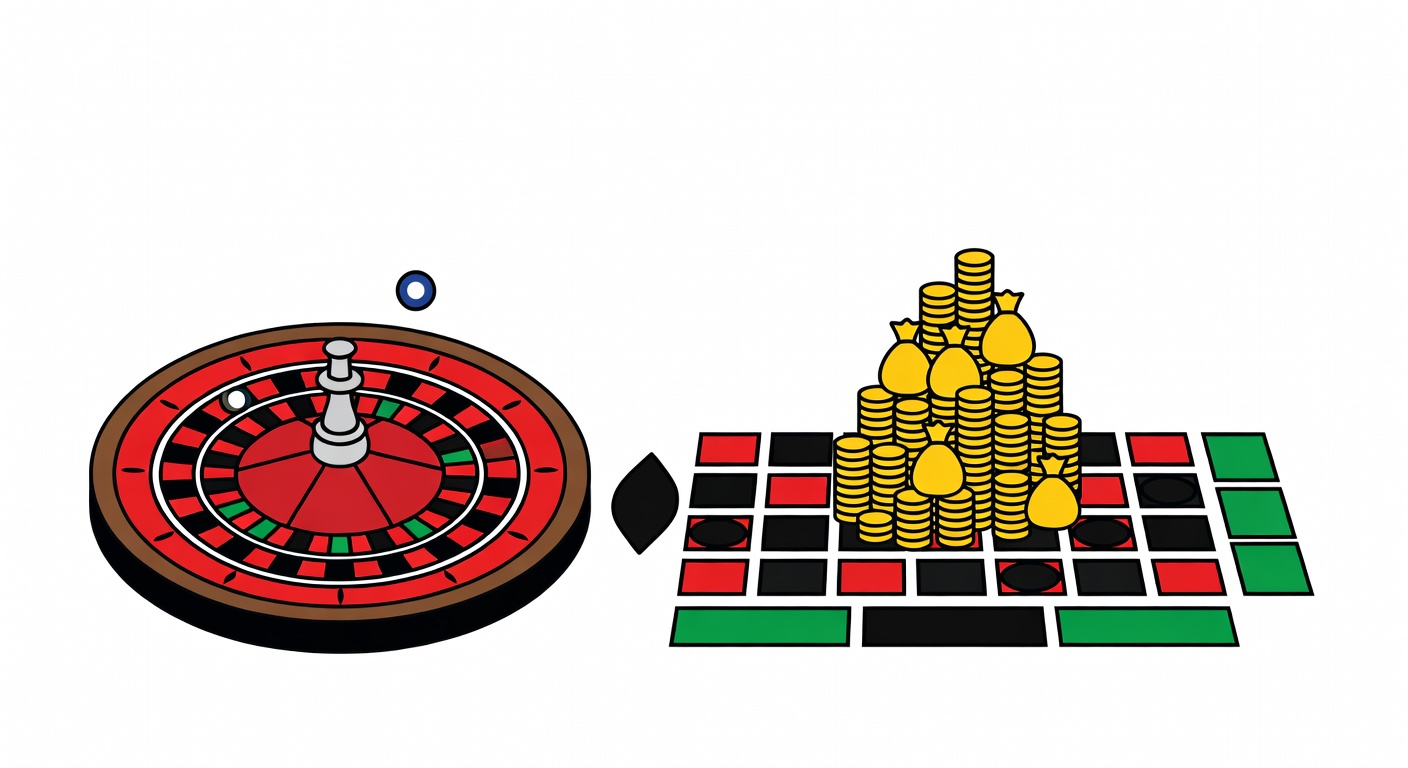
The setup was clean. Revell sold everything. The car, the furniture, the motorcycle, his apartment contents. Four weeks of liquidation. He arrived at the Plaza Casino in downtown Las Vegas with $135,300 in cash and a camcorder filming the whole thing for what would become a Sky One documentary called "Gamble." This was not a story about a desperate man. This was architecture.
Revell was 32. He had worked his way through small trading roles, made some money in arbitrage, then decided that the single biggest thing he had learned was this: risk and return are inseparable. He believed it enough to perform it on a roulette wheel.
The Plaza sits on Fremont Street, the old Vegas, the downtown venue where high limits are handled more openly than they are on the Strip. The floor manager knew what he was coming for. The news had leaked. When Revell asked for $135,300 in chips and placed them on red, what happened next would run for 40 seconds.
The Wheel Stops
Red 7. The wheel landed red. The payout was automatic. Revell walked with $270,600. He had doubled his money on a single spin. The odds against red: 48.65 percent (on an American wheel with a single zero, there are 18 reds out of 37 numbers). He had beaten those odds once.
What followed was the strange aftermath that befalls anyone who wins enough to matter on pure luck. Revell tried to parlay the win further. He played blackjack, baccarat, some poker. By the end of the year, he was down to about $150,000. The momentum of probability reasserted itself. But the single moment in the Plaza never diminished.
The documentary "Gamble" premiered in 2006 and became a minor cult object. Viewers asked the obvious questions: Was this madness? Was it statistical suicide? Was it a performance of privilege, a kind of financial theater reserved for people who had built up enough cushion to absorb the loss?
The answer to all three is yes. Revell came from a stable background. He had no debts. He had no dependents. What he had was a philosophical commitment to the idea that asymmetry creates opportunity. He believed that anyone truly convinced of their analytical ability should be willing to stake something on it. This is the logic of professional poker players, professional traders, professional gamblers. Revell had decided that he believed it strongly enough to perform it on a wheel.
What distinguished this from standard problem gambling is the absence of chasing. After the loss of the doubling to $150,000, Revell largely stepped back from regular gambling. He did not try to win it back. He did not become a casino regular. He had made his statement and collected the consequence. The documentary captured him in the aftermath, wry, unsentimental: "I played roulette. I won. Then I played more gambling and I lost a lot. That's the story."
The mathematics tell you that Revell was lucky, not skilled. The odds against his win were high enough that probability strongly favored a loss. But the cultural interpretation has shifted over time. What started as a stunt became, in retrospect, a statement about risk posture. Revell had essentially said: "I am confident enough in my judgment to stake my entire capital on a single moment." The wheel confirmed his bet was placed. The wheel did not confirm anything about his judgment.
Two decades later, the Plaza Casino still has regulars who remember the spin. The floor manager who was present that day retired and started a poker game in his apartment. The documentary is available online. And Revell eventually became involved in cryptocurrency trading, which is, in its own way, a version of the same bet: the belief that asymmetry in information or positioning creates an edge worth staking capital on. He was not cured of his conviction by the win or the subsequent loss. He was just repositioned his theater from roulette to futures markets.
The lesson the wheel teaches is simple: you cannot learn from a single outcome. The wheel landed red once. It would land black 51 times out of 100 in the long run. Revell won. But he had already known what the odds were. The question was whether knowing was enough to change his behavior. It was not.