

The 1919 Black Sox Scandal: Baseball's Biggest Fix
The Black Sox scandal was not just a sports scandal. It was a game design crisis. Eight players agreed to throw the World Series for money, and the feedback loop that made it possible is still relevant.
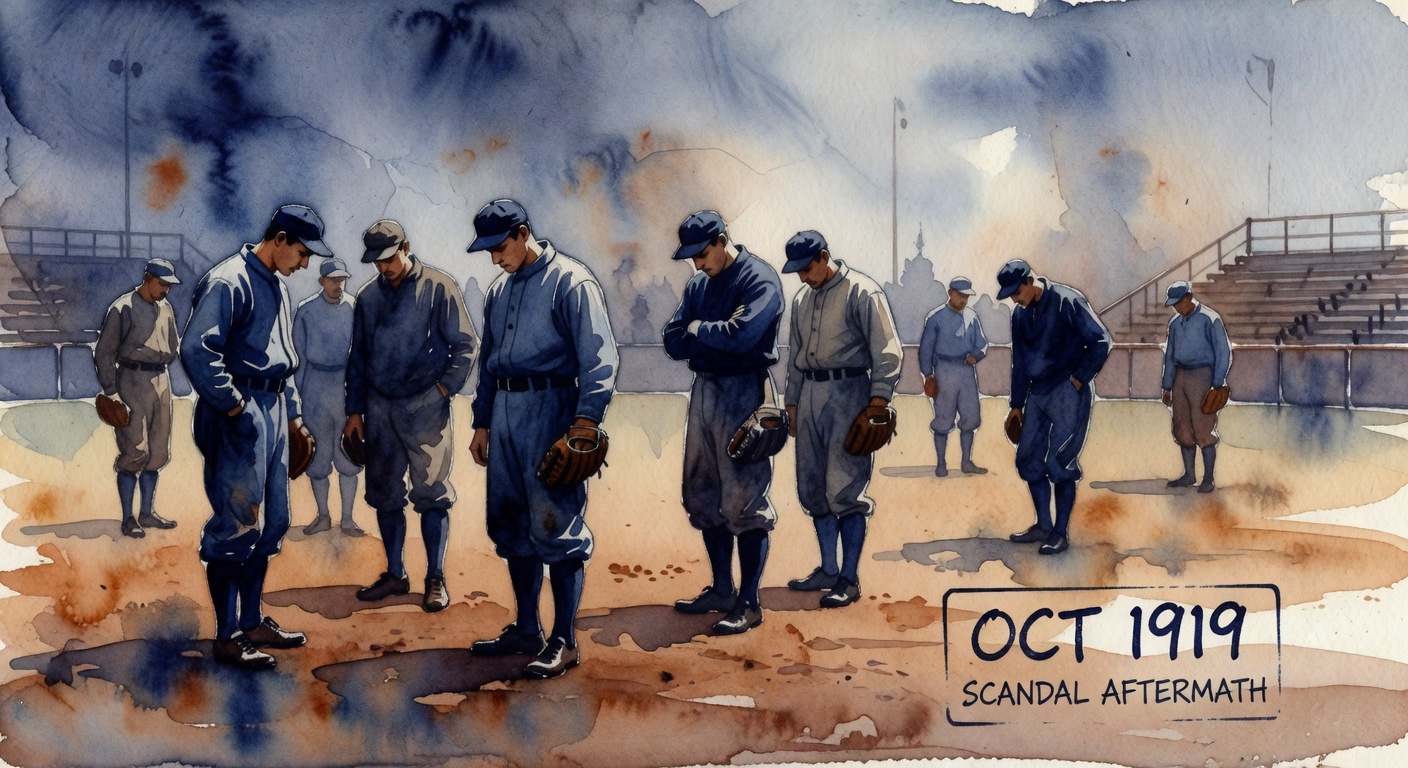
In 1919, the Chicago White Sox were heavy favorites to beat the Cincinnati Reds in the World Series. The White Sox had won the pennant. They had talent. They should have won. Instead, they lost. More accurately, eight of them chose to lose.
Shoeless Joe Jackson, Buck Weaver, Lefty Williams, Eddie Cicotte, and four others agreed to throw the series in exchange for money from professional gamblers connected to mobster Arnold Rothstein. The arrangement was simple: lose on purpose, collect the payment. The gamble worked. The Reds won five games to three. The gamblers won. The players collected payments ranging from $5,000 to $20,000 each (equivalent to roughly $100,000 to $400,000 today).
From a game-design perspective, the scandal reveals a fundamental problem: the incentive structure was broken. A player earned $6,000 per year in salary. The White Sox owner, Charles Comiskey, was known for being cheap and hostile to his players. The gap between what a player was paid and what they could earn by fixing the game was enormous. The reward for cheating vastly exceeded the reward for playing honestly.
The Incentive Loop
The Black Sox scandal happened because the game's design permitted it. No, more than that: the game's design incentivized it. Here are the variables that had to align for eight players to agree:
- Players could influence the outcome of the game (they have agency).
- Players were paid much less than the value they created (payout misalignment).
- Gamblers had money and motivation to bribe them (external incentive).
- There was no mechanism to detect or punish the fix before it happened (weak enforcement).
- The punishment for cheating was vague and unenforced (weak deterrent).
Each of these is a lever in a game-design system. Change any one, and the fix becomes harder or less attractive. Change several, and the fix becomes impossible.
But in 1919, all five conditions were present. Baseball had no formal investigation mechanism. No one was systematically checking for suspicious behavior. The betting odds on the series shifted wildly in the final days before the games, signaling to anyone paying attention that something was wrong. But no one was looking. The game had created a space where cheating was not just possible but rational.
The Feedback System
From a systems-design perspective, the World Series was a high-stakes tournament with a single payout: winning the series. First place got a share of the gate receipts and their salary. Second place got nothing bonus. The gap was significant enough to matter but not large enough that it was obviously wrong to fix the outcome.
Worse, the payout to players was not direct. The White Sox owner took the lion's share of the gate receipts. Players got a cut of the cut. So Joe Jackson was earning $6,000 per year while the owner was earning hundreds of thousands. A bribe of $20,000 was a tripling of Jackson's annual income. For him, the decision was rational.
The gamblers, meanwhile, had a clear feedback loop. They researched the teams, they identified vulnerable players, they made their offers, and they watched the games. Win or lose, they learned. Arnold Rothstein reportedly did this not once but repeatedly, fixing multiple sporting events in the early 1920s.
The only feedback loop that was not functioning was the one between the game's designers (the league) and the integrity of the game itself. No one was monitoring for suspicious outcomes. No one was asking why the betting shifted so dramatically. No one was checking whether player behavior had changed.
The lesson is that any system with high stakes and misaligned incentives will eventually break. The Black Sox scandal was not a failure of individual morality; it was a failure of system design.
The Detection Problem
You might think the fix would have been obvious. The Reds were not expected to win. Why did they? The truth is that sports outcomes are noisy. A heavily favored team loses all the time due to variance, bad luck, or simply superior play on the day. It is hard to distinguish a legitimate upset from a fixed game based on the final result alone.
The players who fixed the series did not have a formal agreement on how to throw. They could not coordinate perfectly. Some of them played harder than they said they would. Some of them got cold feet. The series went to eight games instead of five. The randomness of sports made the fix fuzzy.
It was only months later, when a grand jury investigation happened for unrelated reasons, that the truth emerged. A minor league player who knew some of the conspirators went to the authorities. Confessions followed. The Reds' unexpected victory was suddenly explained. But by then, the games had been played.
The Legacy
Baseball instituted a commissioner and gave him broad investigative powers. The leagues began monitoring for suspicious betting activity. Players who bet on their own games were banned for life. The deterrent was strengthened significantly.
But the underlying incentive problem was never fully solved. Player salaries have increased, closing the gap between what a player earns and what they could earn through fixing. But that was not baseball's intention. It was an accident of market forces.
From a game-design perspective, the Black Sox scandal teaches that integrity requires continuous monitoring and rapid response to anomalies. It requires aligned incentives between players and the integrity of the game. It requires deterrents that are credible and enforced. And it requires a system that tracks outcomes and looks for patterns that signal cheating.
Baseball learned these lessons. Modern sports leagues spend millions on integrity monitoring. They watch for betting anomalies. They track player behavior. They have mechanisms to detect and respond to corruption attempts. The game is harder to fix now, not because people are more honest, but because the system is designed to make cheating difficult.