

How US State-by-State Online Gambling Regulation Generally Works
You do not walk into a single unified US online gambling market. You walk into fifty separate markets with fifty separate rule sets, and that fragmentation is where the real action starts.
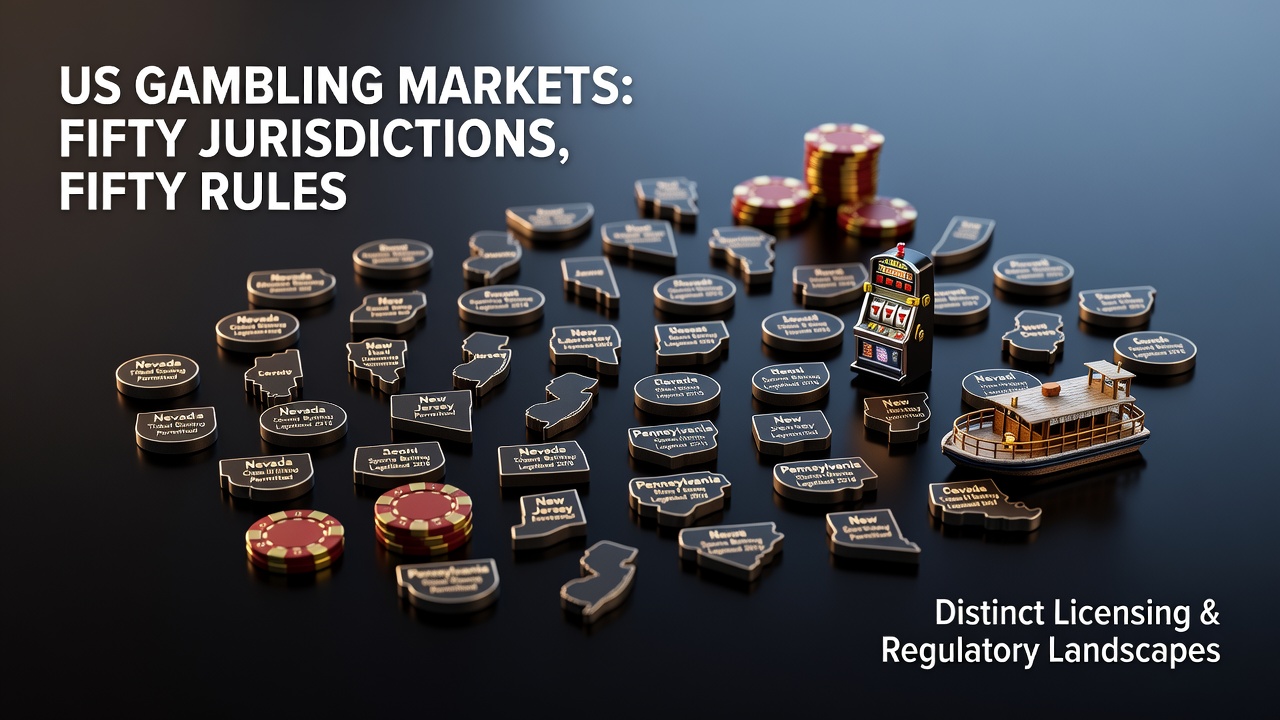
Picture this: you live in New Jersey. You have a phone. You tap a button and you're in a world where online poker is legal, sportsbooks are licensed, and casinos operate with state approval. You cross the bridge into Pennsylvania. Same phone, same apps, except now the rules are totally different. Stricter licensing, different payment processors, sports betting that operates under a separate regulatory framework. You drive to New York. Everything shifts again. This is the real structure of American online gambling. Not a national system. Fifty separate systems that barely talk to each other.
Here's how it works in practice. Each state that wants to offer online gambling must pass legislation. New Jersey passed their law in 2013. Nevada in 2011. Delaware in 2012. There is no federal mandate that states offer this service. There is no national regulator handing out licenses. Each state decides whether to allow online gambling at all, and if they do, they set their own standards.
Once a state passes enabling legislation, they create a regulatory body or assign authority to an existing gaming commission. That body creates rules for licensing, player account security, payment processing, tax collection, responsible gambling measures, and anti-money-laundering compliance. Then operators apply for licenses. They pay fees. They submit to audits. They demonstrate they can run the operation without money laundering or fraud.
The Mechanics of State Licensing
Most states that have legalized online gambling have created some variant of this path:
- Operator submits license application
- State gaming commission conducts background checks on ownership, management, and financial backers
- Operator demonstrates financial stability and proprietary software compliance
- State charges licensing fee, typically $1 million to $10 million upfront
- Operator pays ongoing tax on revenue, usually 10 to 20 percent
- Operator submits to regular audits and compliance inspections
- Player accounts are insured or segregated to protect player funds
The specifics vary wildly. New Jersey has allowed interstate poker compacts with Nevada and Delaware. New York decided online sports betting could launch without creating a full casino market. Pennsylvania charged operators $10 million per license. Delaware wanted a minimal footprint and offers fewer games. Each state's approach reflects different political priorities and revenue targets.
The thing that separates regulated online gambling from the old-school offshore model is visibility. A licensed operator in New Jersey reports its revenue to the state. Players can see the gaming commission's quarterly reports. If a dispute arises between a player and the operator, there's a regulatory body with enforcement power. If the operator tries to steal money, there are real consequences. This is not foolproof, but it is structurally different from playing at a site licensed in Malta or Curaçao and hoping they feel like honoring your withdrawal.
Payment processing is where the state-by-state structure creates friction. Credit card companies and payment processors generally will not work with offshore gambling sites. But they have also been cautious about working with online casinos, even licensed ones, because the legal landscape has been confusing. This means licensed operators often have fewer payment options than you'd expect. Sometimes they use specialized payment networks. Sometimes they partner with state-chartered banks that take on the regulatory risk.
Why Fragmentation Matters
The fragmented approach means one thing clearly: there is no efficient national market. If you wanted to launch an online casino across all fifty states simultaneously, you would need to navigate fifty different licensing processes, meet fifty different technical standards, and pay licensing fees that could total $100 million or more. Large operators do this. DraftKings and FanDuel have done it because the market is large enough to justify it. Smaller operators cannot.
This fragmentation benefits established players and hurts new entrants. It also creates dead zones where state residents cannot legally access regulated gambling, which means they access unregulated gambling instead. The regulation is supposed to protect players, but incomplete regulation scattered across states creates a patchwork where protection varies wildly.