

Slot Bankroll Management: How to Make Your Budget Last
The dirty truth about slots: your 500 dollar budget can last a weekend or two hours, depending on one variable that nobody talks about honestly.
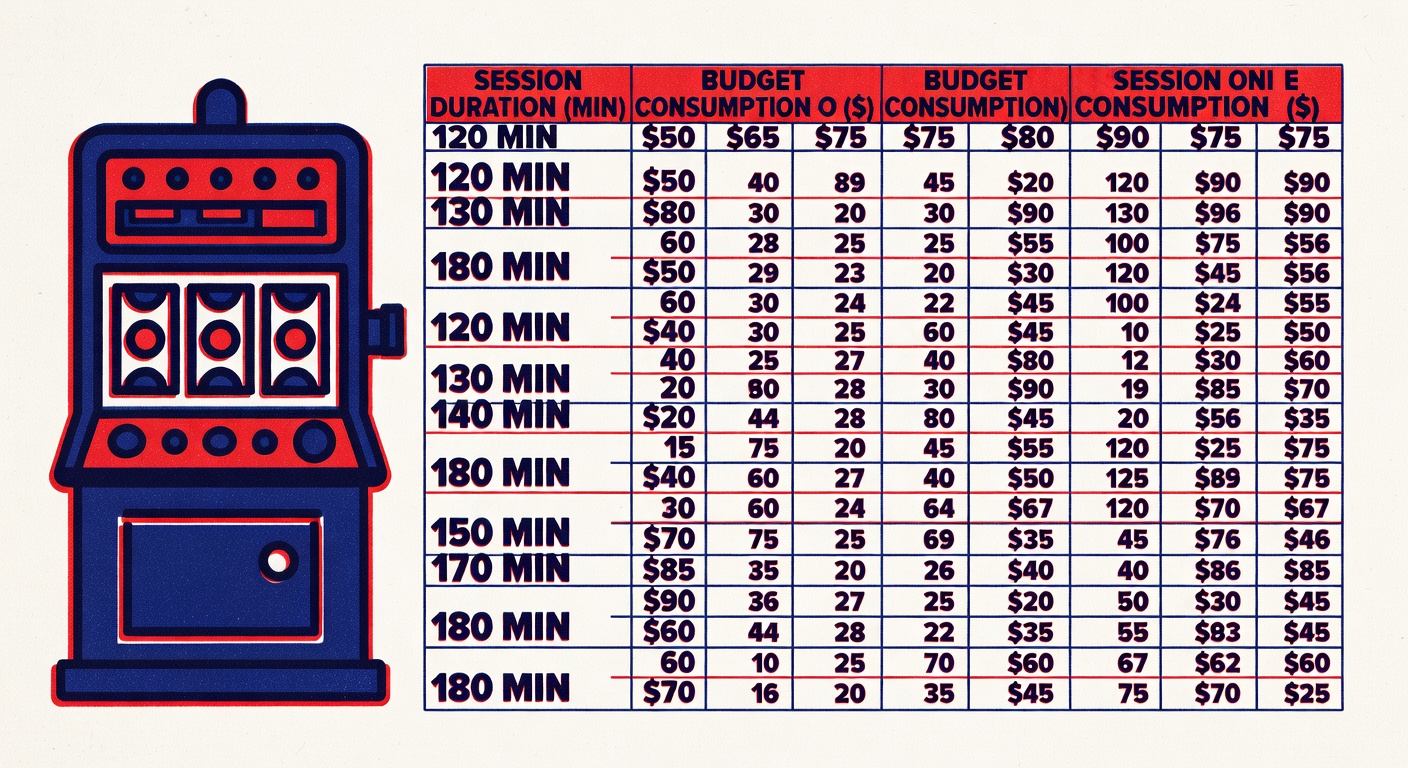
Here is the core truth, written plain: if you are playing slots with the intent to keep the money, you are in a war you cannot win. Not because you are stupid. Not because slots are rigged (they are not; they are tested, certified, random). You are losing because your bankroll management is dictated by machines designed by people who studied behavioral economics in grad school.
Let me lay out the specific problem. You have 500 dollars. You want it to last. Slots have a house edge (call it 2 to 8 percent, depending on the game and the casino). That is not a secret. The casinos advertise the RTP: 94 percent, 96 percent, 97 percent. What they do not advertise is the speed at which the house edge eats your money: your volatility, your standard deviation, how many spins you get before half your stack is gone.
The Calculation Nobody Does
You sit at a machine. You are betting 50 cents per spin. That is 30 dollars per hour, assuming 60 spins per minute, which is standard. Your bankroll: 500 dollars. How many hours? Divide and you get 16 to 17 hours before you are broke, all spins, no comps, no bonuses, straight math.
But you do not lose linearly. You lose in bursts. You hit a dry stretch: 50 spins, no wins. Then a bonus round. You win back 80 bucks. Then another dry stretch. This is variance. And variance punishes small bankrolls.
When I stopped trying to "beat" slots and started trying to survive them, I used a simple rule: I divide my budget into 10 pieces. I play one piece and quit. If I am up more than 20 percent, I pocket it and walk. If I am down 50 percent, I walk. That is the structure. It turns a losing game into a game where I control my exposure. - A pragmatist, somewhere in Nevada
That advice is correct, and here is why: you are not actually trying to make money from slots. You are paying for an experience, a specific number of hours of entertainment, a chance (small) to hit something big. You should price it like a movie ticket. A 500 dollar bankroll should buy you 20 hours of play. At 25 dollars per hour, you can afford that price and sleep at night.
The Machines Are Designed Against You
Slot machines have a feature called "time on device." Operators measure it. They optimize for it. They pay mathematicians to design hold percentages that keep you in your seat longer. A machine that takes 2 percent every spin across 1000 spins (two weeks of casual play at 15 minutes a day) keeps you longer than a machine that swallows 50 percent in one afternoon and spits you out.
The math is simple: slow bleed beats fast bleed. You do not feel the loss. You feel the near-misses, the second-place finishes, the "almost" moments. The brain calculates those as reasons to try again.
Slots are not poker. You cannot outthink them. You cannot find an edge. The RNG is tested by independent auditors (eCOGRA, GLI, Technical Systems Testing). The randomness is real. What you are playing against is your own brain, your own ability to quit before the session flips.
Bankroll Rules That Actually Work
First: decide what you are willing to lose. Not what you hope to win. What you are willing to lose, today, never getting back. Once you name that number, divide by five. That is your session bankroll. If you have 500 dollars and you want to play over a month, one session is 100 dollars, not 500.
Second: commit to a stop-loss. If you hit minus 50 percent of your session bankroll, you quit. Not "take a break." Quit. Walk out. The machines will still be there tomorrow. They are not going anywhere.
Third: do not chase. If you lose a session, do not add money to it. You do not get a second chance to win that money back tonight. You play tomorrow with a fresh budget if you choose to play at all.
Fourth: pay attention to volatility. Megabucks, Mega Moolah, progressives: these are high-variance games. You can spin for hours and win nothing, then win 2 grand on one spin. Great if you hit. Brutal if you do not. For longevity on a fixed bankroll, play lower-volatility games: IGT Wheel of Fortune, NetEnt Gonzo's Quest variants, anything rated medium-low on the operator's page.
Fifth: use the casino's own math against itself. Check the RTP. Play the highest RTP game you find at that casino. A 97 percent RTP game is infinitesimally better than a 94 percent game, but over 1000 spins, that is real money in your pocket instead of the house's.
The Honest Conclusion
Your 500 dollar budget is your health bar. The machine's job is to reduce it to zero. You cannot change the machine. You can only change how fast you feed it. Play slow. Quit early. Pocket your wins. Accept your losses. That is not beating slots. That is surviving them. And survival is the realistic goal.