

Casino 1995: How Scorsese Captured the Mob-Era Las Vegas
The film Casino depicts a specific historical period in Las Vegas operations. To understand what Scorsese got right and wrong, we must distinguish between the film's narrative and the actual regulatory environment of the 1970s and 1980s.
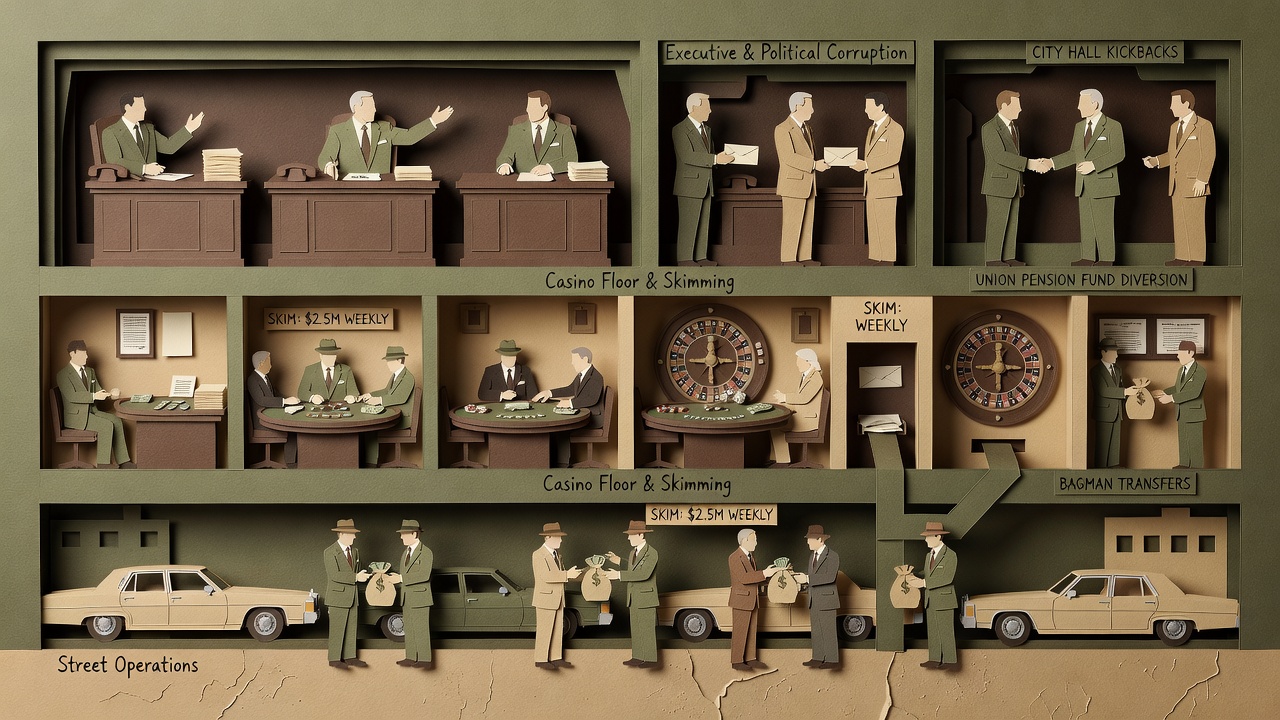
Casino was released in 1995 and depicts events primarily from the 1970s through the early 1980s in Las Vegas. The film follows Sam "Ace" Rothstein, a professional gambler installed to manage a major casino, and Nicky Santoro, a mob-connected enforcer who creates chaos. The narrative tension derives from the clash between Ace's desire for orderly, profitable operations and Nicky's demand for skimmed cash and personal vendettas. To assess the film's accuracy, we must consider both the regulatory context and the business practices that actually governed Las Vegas casinos during that era.
In the 1970s and 1980s, Las Vegas operated under Nevada state gaming laws and the oversight of the Nevada Gaming Commission and Nevada Gaming Control Board. The Federal Bureau of Investigation also maintained surveillance of major casino operations, particularly those with suspected organized-crime connections. Legitimate casino operators maintained relationships with banks, reported their finances in filings with regulatory bodies, and submitted to audits. This is important: the film depicts a casino that functions despite an implicit assumption that the mob controls everything. In reality, even mob-connected casinos had to maintain a facade of legitimacy for regulators and banking partners.
The Skimming Operation in Historical Context
The film's central plot device is the skim: cash diverted from table games before it is recorded in the official count room. In the film, this skim reaches hundreds of thousands of dollars per week. This is where Scorsese's narrative deviates most clearly from regulatory practice. Skimming did occur in Las Vegas history, and the FBI documented actual cases, particularly at certain operations in the 1960s and early 1970s. However, by the 1980s, the regulatory framework made large-scale skimming operationally risky. Gaming Control Board procedures required:
- Direct count-room supervision
- Multiple witnesses during the count
- Documented cage procedures
- Regular gaming audits by outside firms
- Reconciliation of table drop with recorded revenue
- Bank deposits matching reported income
A sustained skim of the magnitude shown in Casino would have created discrepancies too large to hide in filing documents and bank records. The film compresses the historical timeline and exaggerates both the scale and the impunity of skimming for narrative effect.
What the film does capture accurately is the tension between legitimate business operations and the presence of individuals with organized-crime connections. Casinos in that era did employ people with such backgrounds. The regulatory question was whether such individuals exercised control or simply worked within an otherwise legitimate structure. The Nevada Gaming Commission took this distinction seriously and had enforcement mechanisms, including the ability to revoke licenses.
What the Film Shows About Power Structures
Scorsese's depiction of Las Vegas as a place where organized crime runs everything is a dramatic simplification. The actual historical situation was messier. Casinos with legitimate corporate ownership operated alongside properties where individuals with mob ties held management roles. Regulators were aware of these connections and applied scrutiny proportional to the perceived risk. Major operators like the large Strip casinos had shareholders and institutional investors who demanded profitability and compliance with regulatory standards.
The film's portrayal of the casino's economic function is broadly accurate: casinos generated enormous cash flows, attracted high-net-worth players and tourists, and operated around the clock with minimal oversight compared to modern standards. The portrayal of violence, personal conflict, and the eventual FBI investigation reflects actual historical investigations that occurred during this period.
Casino captures the period's atmosphere and the genuine tension between criminal interests and legitimate business operations. However, it romanticizes the operational scale of illegal activities and compresses decades of regulatory evolution into a single narrative arc. The film remains valuable as a cultural document of how Las Vegas was perceived in the 1990s, but viewers should recognize that actual casino operations under gaming regulation were significantly more constrained than the film suggests.