

How to Recognize a Gambling Problem Before It Escalates
Problem gambling follows a pattern. Knowing the markers helps you catch it before the system breaks. The early signs are specific and observable.
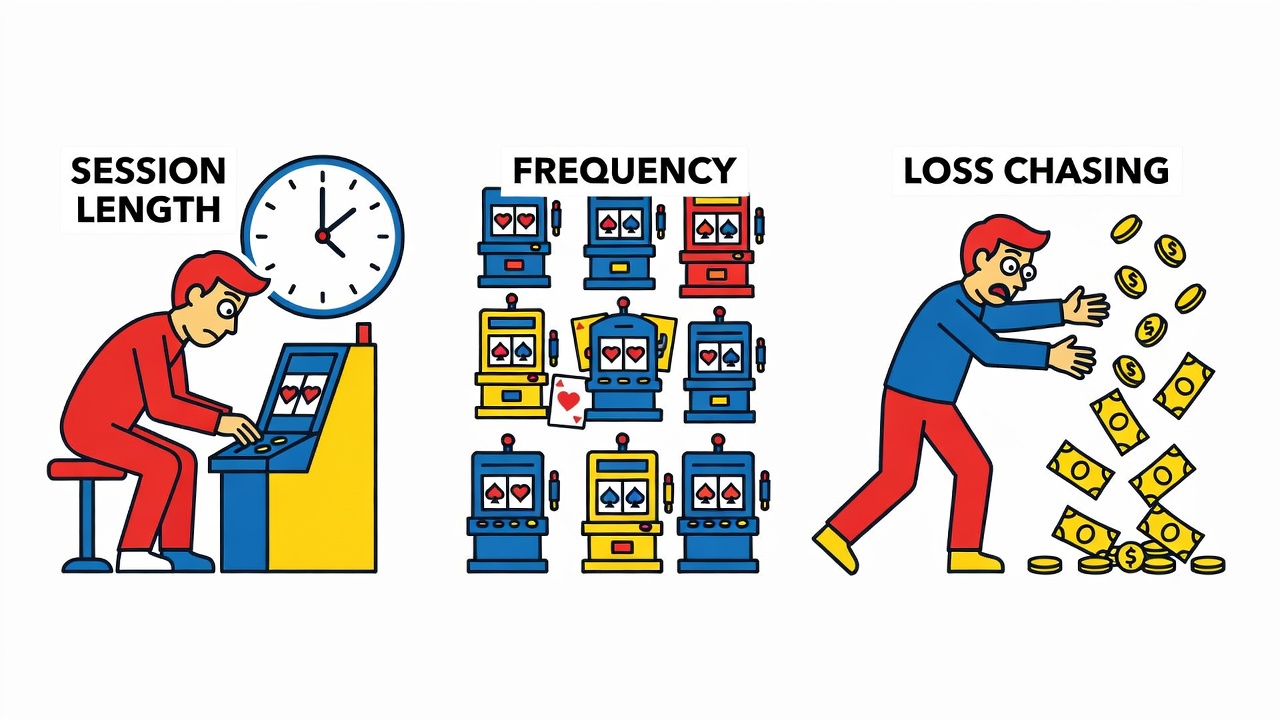
The Structure of Harmful Gambling
First, the baseline. Recreational gambling is a closed system with clear parameters: money wagered, odds known, a defined endpoint. You buy a lottery ticket. The draw happens. You win or lose. The loop completes. Harmful gambling breaks this loop. The gambler continues seeking the loop rather than accepting its outcome. This is the central shift.
The progression moves through recognizable stages. Second, there is increased frequency. The gambler moves from occasional play (monthly) to regular play (weekly) to constant play (daily, multiple sessions). This alone does not indicate problem gambling. Many people play daily without issues. But paired with other markers, increased frequency signals escalation.
Third, tolerance builds. This is measurable. Early on, a fifty-dollar session satisfies. Later, fifty dollars feels insufficient. The gambler needs one hundred, then two hundred. The same wager produces diminishing emotional return. This is the neurobiology of the variable-ratio reinforcement schedule. The brain adapts. Larger stakes are needed to produce the same dopamine response. This is not moral failure. This is how the brain's reward system works.
Fourth, chasing emerges. After a loss, the gambler immediately returns to try to recover the money. This is distinct from the initial play. It is reactive. It is driven by the desire to escape the state created by losing, not by the desire to play. Chasing is one of the strongest predictors of harmful gambling progression.
Observable Behaviors
First, secrecy increases. The gambler hides accounts, uses separate devices, clears browser history, lies about time spent. These are not signs of shame alone. They are signs that the gambler recognizes the behavior has crossed some line and knows others would object. When a behavior becomes something you hide, escalation is usually underway.
Second, financial pressure appears. Unexpected money disappears. Credit card bills rise. The gambler takes money meant for bills and uses it for gambling. Loans are taken. Savings are drained. The financial pressure creates a new problem that drives more gambling (chasing losses becomes recovery strategy).
Third, emotional dysregulation clusters. Irritability increases when the gambler cannot play. Anxiety spikes when gambling urges arise. Mood improvement occurs only during gambling. The gambler becomes emotionally dependent on the activity. Without it, regulation suffers. With it, regulation improves temporarily. This is the core of behavioral addiction.
The Near-Miss Effect
One specific mechanism matters. Near-miss experiences (almost winning) produce stronger gambling urges than clear losses or clear wins. The brain interprets almost-winning as a signal that winning is close, just one more spin, just one more hand. This drives rapid reinvestment. A person who experiences two near-misses in a session is more likely to increase spending than a person who experiences two clear losses. The near-miss is not random. Game design uses it intentionally. Understanding that this is a design choice, not a reflection of odds, helps contextualize the feeling of almost-winning.
The Assessment Framework
If you recognize three or more of the following, escalation risk is elevated: increased frequency of play, rising stakes, chasing losses immediately after, financial secrecy, money being diverted from necessities, emotional dependence on gambling for mood regulation, unsuccessful attempts to reduce or stop, relationship strain because of gambling, lying to others about gambling, and using gambling to escape problems.
None of these alone indicates disorder. Combinations suggest it. Early recognition, before financial and relationship damage accumulates, offers the best path to intervention.