

Recency Bias in Sports Betting and How to Avoid It
A team won their last three games. You think they're good. The market agrees. Both of you are probably wrong, and you don't know it yet.
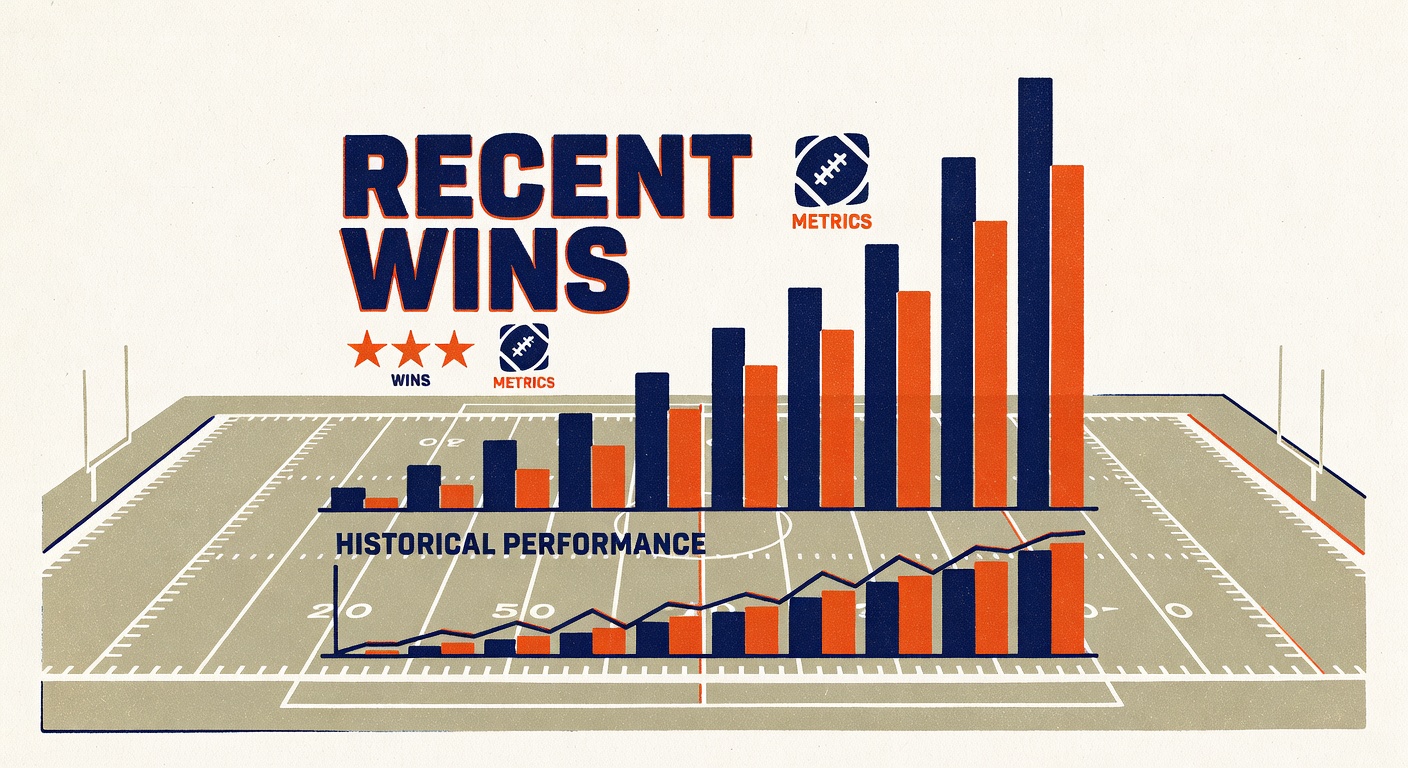
Recency bias is the tendency to weight recent events more heavily than distant ones when making decisions. A team went 2-8 over 10 games. They then won 2 straight. Your brain now thinks they're a 4-10 team, not a 2-8 team. This is false. They are still, fundamentally, a 2-10 team with a hot streak.
In sports betting, recency bias costs money. Consistently.
How It Works in Practice
The Kansas City Chiefs play the Denver Broncos. The Broncos won their last four games. The sportsbook opens the line at Broncos minus-3. You see the four-game winning streak and think: this team is rolling.
You don't look at what happened before those four games. The Broncos were 4-9. They stumbled through a weak schedule. Now they happen to have faced three backup quarterbacks and a team missing their starting offense.
The market has already adjusted for this. The minus-3 reflects the baseline that the Broncos are still a below-average team. The recent wins are already priced in.
But your brain weights the recent streak too heavily. You see the four wins and think they matter more than they do. You take Broncos at minus-3. You feel confident. You will probably lose.
The Statistical Reality
Over an NFL season, a team's win-loss record in the last four games is a poor predictor of its win-loss record in the next four games. The correlation is weak.
A team that goes 3-1 in weeks 1-4 will go something like 7-7 or 6-8 in the remaining season. The recent performance is information, but not as much information as total season track record.
This is because gambling teams are regression-prone. They tend to return to their mean. A team playing better than expected recently tends to play worse than expected soon. A team playing worse than expected tends to improve.
This is not mystical. It is just probability. Some of that four-game winning streak was luck. Good field position on some plays. Kicker making a difficult kick. Fourth-quarter breaks going their way.
Those breaks even out.
Why the Market Sometimes Misses This
The market is generally efficient, meaning it prices in public information quickly. But the market is made of humans, and humans suffer from recency bias too.
In the example above, the market might open Broncos minus-2.5, then move to minus-3 as money comes in on the Broncos based on the four-game winning streak. The sharper players see this as an overreaction and fade it. But if enough casual money comes in on the Broncos, the line can move to minus-3.5.
This creates a small window: from minus-3 to minus-3.5, there is value on the Chiefs. A sharp bettor will take it.
How to Correct For It
The first step is awareness. When you evaluate a team, pull up the full season record. Not just the last four games. Look at the last 16 games of the prior season. Look at strength of schedule.
A team's recent wins might have come against weak competition. Its recent losses might have come against playoff teams. Context matters, and recency bias makes us ignore context.
The second step is to use predictive models. Don't just look at record. Look at power ratings. Look at a team's Pythagorean expectation (the expected win-loss record based on points scored and allowed). If a team has a 5-7 record but a Pythagorean expectation of 6-6, they have been unlucky. They are probably undervalued.
The third step is to fade popular money. If the market is heavily weighted toward a team based on recent performance, and your analysis doesn't support the line, bet against it.
An Example From 2022
The Arizona Cardinals started 2-4. They then went 4-2 over the next six weeks. The market priced them as a playoff team. The lines shifted significantly in their favor.
But the 4-2 record came with a losing Pythagorean expectation. They were outscored, on average, by their opponents. They had won some close games, some of which could have gone either way.
Their underlying metrics (EPA per play, defensive efficiency, turnover margin) suggested they were still a below-.500 team. A sharp bettor would have been fading them.
The Cardinals eventually collapsed and finished 4-13.
The Deeper Lesson
Recency bias is not specific to sports betting. It applies to stocks. It applies to hiring decisions. It applies to relationships. We weight what we experienced yesterday more heavily than what happened a month ago, even when both are relevant.
Gambling reveals this bias because the outcomes are unambiguous. You either won the bet or you didn't. There is no rationalization available.
The good news is that awareness helps. Once you know what recency bias is, you can pause before placing a bet and ask: am I reacting to the last three games, or am I evaluating the full picture?
The market will keep making this mistake. There will always be casual bettors weighting recent performance too heavily. This is where the edge lives.
You just have to notice it before you fall into the same trap.