

How to Prepare Your Documents for Smooth KYC Verification
KYC verification is not punishment. It is protection. Preparing properly means you get verified faster.
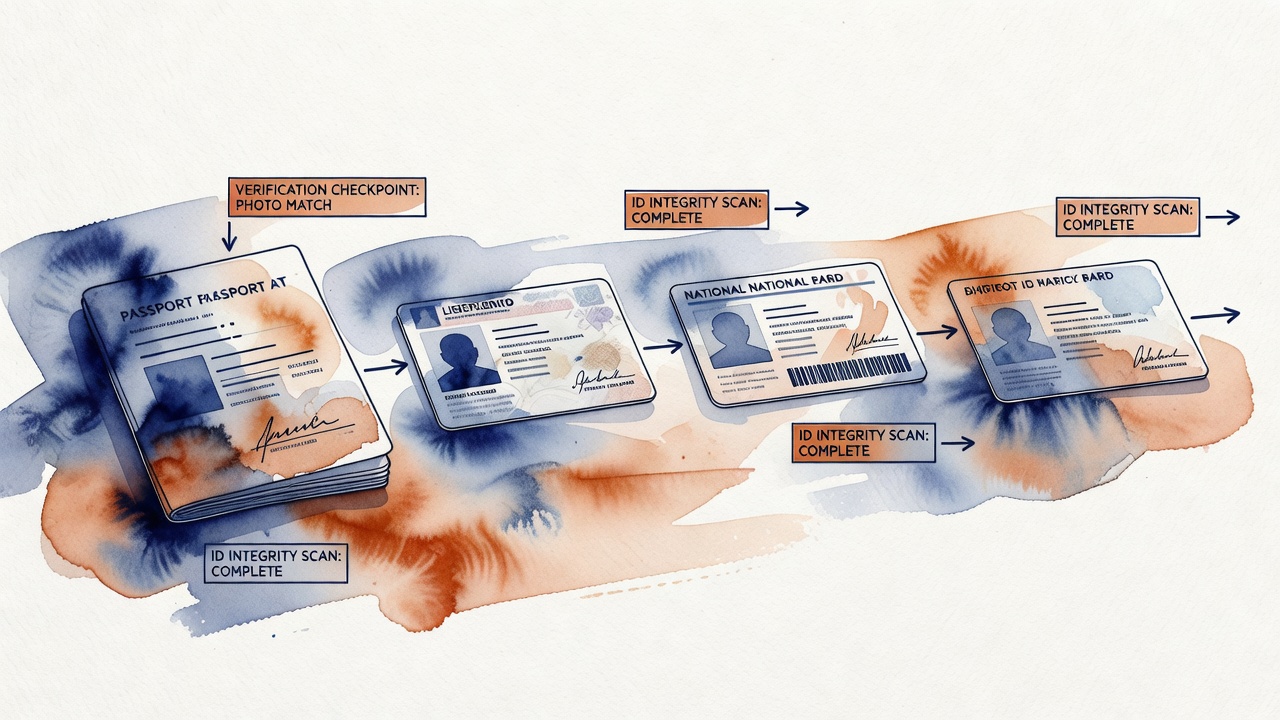
Why KYC Exists
KYC stands for Know Your Customer. It is a regulatory requirement. Sportsbooks, casinos, and gambling operators are required by law to verify the identity of customers before accepting deposits. This protects against money laundering, fraud, and illicit activity.
When you sign up for an account, you provide basic information: name, address, birthdate. The operator flags certain pieces of information (if you look underage, if your address seems unusual). The operator then requests documents to verify you are who you claim to be.
What Documents You Will Need
Most operators require two pieces of identification. A government-issued ID (passport, driver's license, national ID card) plus a proof of address (utility bill, bank statement, lease agreement from the last three months).
The government ID must be current and must show your photo. Expired IDs are usually rejected. Blurry photos are rejected. If the name on your ID differs from the name on your account (marriage, legal name change), include documentation explaining the difference.
The proof of address must show your name, full address, and a recent date (within the last three months). A utility bill works. A credit card statement works. A bank statement works. A lease agreement works. Insurance documents work. A letter from your employer sometimes works (check the operator's specific rules).
Common Rejection Reasons
Documents are rejected for specific reasons. The photo is too dark. The address is incomplete. The date is outside the three-month window. The name does not match exactly. The document is not in English (some operators require English documents; others accept local documents).
Most rejections are not punitive. They are administrative. The operator needs you verified. You need access to your account. Both parties want this resolved quickly. A simple resubmission usually solves it.
How to Prepare
Take high-quality photos of your documents. Good lighting. Straight angle. All text visible. Both sides if the ID has information on both sides. Make sure your face is visible and recognizable.
For proof of address, use a document dated in the current month or recent month. If your current bill has not arrived, a bank statement from the previous month will work. Make sure your name and full address are visible.
If your documents are not in English and the operator requires English, get them translated by a professional translator. A family member's translation will be rejected.
Have a backup document ready. If your first submission is rejected, you can immediately submit a second document without waiting.
What Happens After Submission
Most operators verify KYC within 24 hours. Some take up to three business days. During verification, your account is usually limited. You cannot deposit. You cannot withdraw. You are in a holding state.
Once verified, the hold is lifted. You can deposit and play. KYC is typically a one-time process. You will not be asked again unless you request large withdrawals or update your account information.
If Verification Fails
If the operator cannot verify your identity after multiple attempts, your account is usually closed. Your balance is returned to you (by the method you deposited). This is rare if you have provided legitimate documentation.
KYC is not designed to make your life difficult. It is designed to protect the industry from criminal activity. Cooperation and clear documentation make the process fast.