

Prepaid Cards for Casino Deposits: How They Work
Prepaid cards separate the psychological act of spending from the reality of your bank account. Casinos use this. Understanding the mechanism reveals why.
Richard Thaler famously described mental accounting as the way people treat money differently depending on its source and intended use. A $100 bonus feels safer to gamble than $100 from your paycheck. This is irrational. Money is money. Yet the mind treats them differently.
Prepaid cards exploit this architecture of the mind. They create a buffer between your bank account and the casino. This buffer changes how you think about the money you deposit.
What a Prepaid Card Is
A prepaid card is a payment instrument you load with funds in advance. You visit a store and hand over cash, or you fund it from your bank account. The card then holds that balance. When you spend, the balance decreases.
Common prepaid cards in the gambling context are Paysafecard and similar services. You buy a card worth $50, $100, or $500. You enter a PIN code. The casino's system accepts it as a deposit method.
From the casino's perspective, a prepaid card is a low-risk payment. The funds are already secured before the customer makes any bet. There is no chargeback risk. The customer cannot claim the transaction was fraudulent and reverse it.
From the customer's perspective, the card feels like house money.
The Psychology of Segregation
Thaler identified what he called the "house money effect": once money is allocated to a specific mental account, it is treated more recklessly than money from other accounts. A gambler who wins $200 will often gamble it more aggressively than $200 from their salary.
Prepaid cards create this effect artificially. You load $200 onto a card. Psychologically, this money is now separated from your other funds. It is not in your checking account. It is on this card. It feels like it is already "gone" in a sense. You are now spending house money.
This produces a measurable effect on gambling behavior. Casinos see higher average bets and longer session durations when players use prepaid cards than when they use credit cards tied directly to checking accounts.
The Mechanics of Loading
A customer buys a prepaid card at a retail location (convenience store, supermarket, online). The customer funds it with cash or a debit card. The card comes with a PIN.
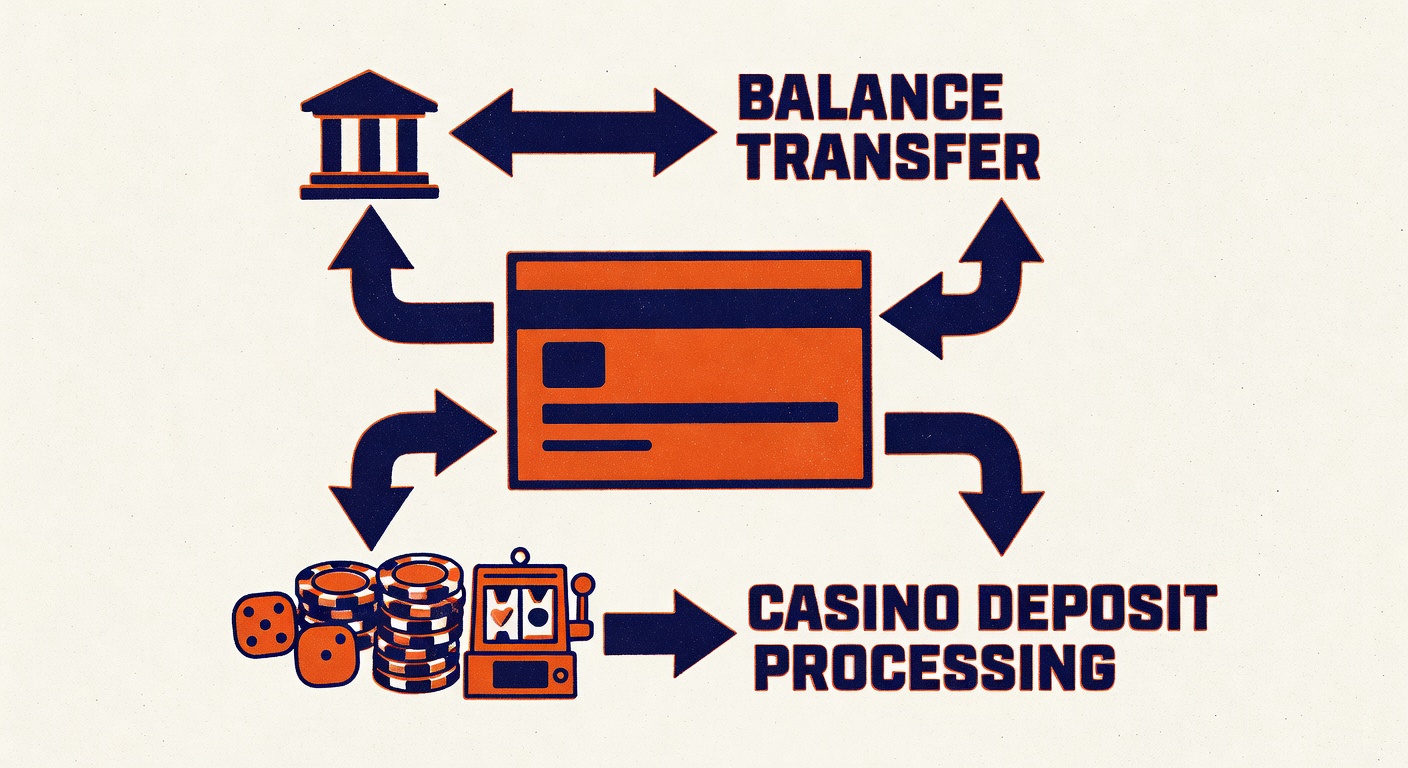
At the casino, the customer enters the card details and PIN. The casino's system contacts the prepaid card company's servers. A fund transfer is initiated. The balance on the card decreases by the deposit amount. The casino's customer account increases.
The time lag between card purchase and casino deposit can create additional psychological distance. You buy the card on Monday. You think about it. You decide to deposit Wednesday. By the time you enter the casino, the money feels less connected to your current self.
This is not accidental design. It is intentional. The prepaid card company benefits because it creates a fee (typically 3 to 7 percent for the privilege of issuing the card or processing the deposit).
Comparing Loss Aversion
Loss aversion is the principle that losing $100 hurts roughly twice as much as gaining $100 feels good. The classical experiment by Kahneman and Tversky (1979) demonstrated this asymmetry.
Prepaid cards reduce the subjective loss when you lose. If $200 was in your checking account and you lost it, the pain is acute. It is directly tied to your livelihood.
If $200 was on a prepaid card, and you lost it, the pain is slightly muted. It was already separated. It was already a little bit not-yours.
Practical Design Choices
Many casinos specifically highlight prepaid cards as a deposit option. At DraftKings' sportsbook, Paysafecard is featured prominently. At Stake.com (a cryptocurrency-focused casino), prepaid card deposits are an advertised feature.
Why? Because casinos know that players using prepaid cards will have longer sessions, make larger bets, and will redeposit more frequently (because the money was already treated as expendable).
The flip side is that the customer often pays fees on both ends. Buying the prepaid card costs money (typically 2 to 3 percent). Some casinos also charge a deposit fee (1 to 2 percent). You could lose 5 percent of your bankroll before you place a single bet.
The Regulatory Angle
Prepaid cards are heavily used in jurisdictions where direct bank transfers are restricted. In the United States, banks are legally prohibited from processing gambling transactions. In the United Kingdom, prepaid cards are a common workaround because they fall into a regulatory gray area.
The MGA (Malta Gaming Authority) and UKGC (UK Gambling Commission) both permit prepaid card deposits, but they require operators to implement anti-money-laundering controls. This means the casinos verify customer identity if a single prepaid card transaction exceeds a certain threshold (usually $2,500).
What This Tells Us About Ourselves
The existence and promotion of prepaid cards reveals something about how casinos understand human decision-making. They understand that money in your checking account feels like money that belongs to you. Money on a prepaid card feels a little bit like it doesn't.
They design their systems around this psychological truth. The card is optional. The customer is free not to use it. But by making it easy and by framing it as a convenient option, casinos increase the likelihood that customers will deposit more, more frequently, with less friction from loss aversion.
This is not malicious. It is not hidden. It is behavioral economics in practice. Understanding the mechanism helps you understand your own choices.