

How to Play Penny Slots Without Burning Through Your Balance
Penny slots seduce through false economy (1-cent bet feels safe), compound mathematics (wagering exceeds apparent cost), and operant conditioning (near-misses trigger dopamine like any engineered reward). Here is how not to implode.
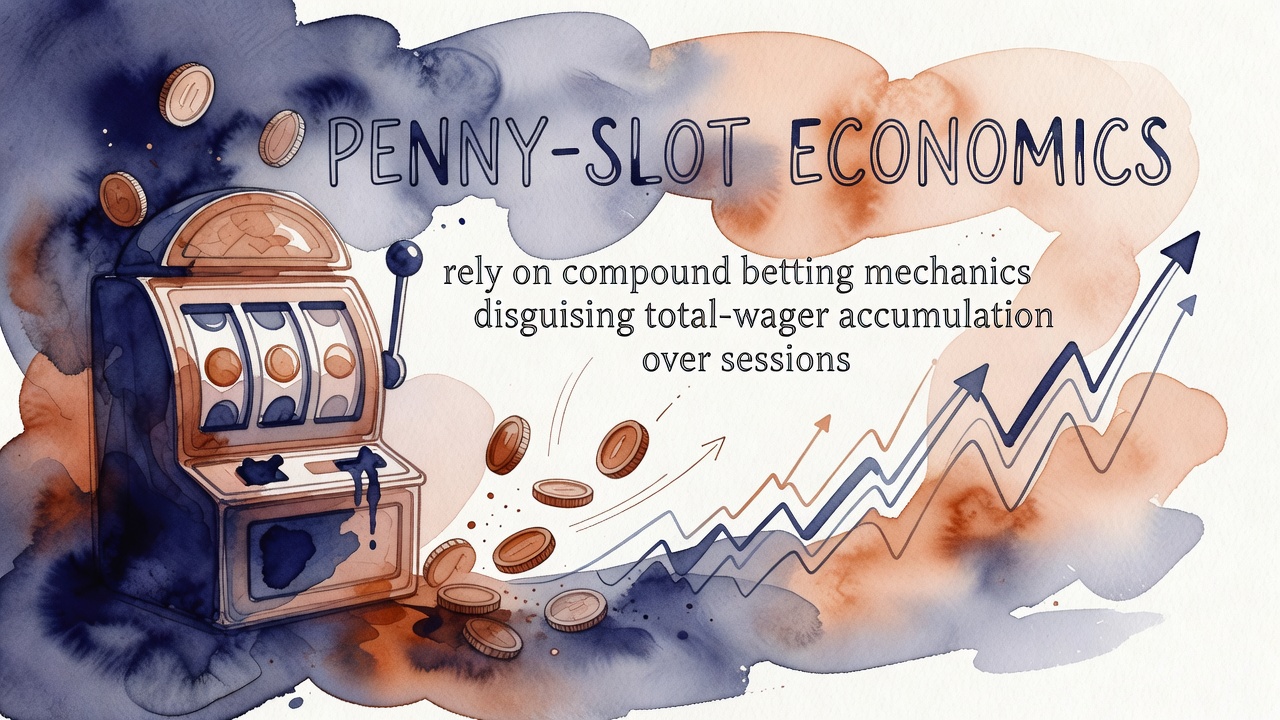
Penny slots are the devil's lie told in bright colors and beeping sounds and they absolutely will wreck your balance if you are not paying attention, which is the entire point, which is why I am telling you this now.
First, understand the mathematics: a penny slot charges 1 cent per coin, yet modern machines permit play of 20, 50, even 100 coins per spin. You assume you are betting 1 cent. You are actually risking 20 cents or 50 cents or 100 cents per spin. Casinos deliberately label these machines "penny slots" and position them prominently because the 1-cent marker psychologically registers as "safe, low-risk, I can afford to lose this." Your brain accepts the word "penny" and stops tracking actual amounts wagered. This is not accident. This is deliberate design.
Second, the hold percentage is brutal. A penny slot machine extracts 4 to 8 percent of total action. Sit down with a 100-dollar stake and play for an hour at 20 coins per spin (20 cents per action) at 80 spins hourly (roughly authentic play speed), you will have put 1,600 dollars through the machine. The house will take 64 to 128 dollars from your bankroll. Your initial 100 dollars vanishes before you notice the decline because small wins feel substantial and losses feel like variance.
The Balance Destroyer
Penny slots employ what behavior researchers call "near-miss" reinforcement. You spin and observe two matching icons (cherries, sevens, whatever) land on lines you did not select, or land almost-but-not-quite on your chosen payline. Your neural pathways fire dopamine: you were ALMOST there, you nearly won, you came so close, spin again.
This is operant conditioning, identical to mechanisms triggering nicotine addiction or compulsive gambling. The near-miss activates reward expectation more potently than outright loss would. An obvious loss registers as: "I lost, move on." A near-miss registers as: "I almost won, I am improving, spin again, I can refine my approach."
Your strategy is pointless. Penny slots lack skill elements. RNG (random number generator) determines every outcome. The reels spinning are theater. Yet the near-miss mechanism guarantees your brain categorizes each near-miss as progress rather than loss. Deposit 100 dollars into penny slots and you will exhaust it through near-miss sequences, reliably.
How Not to Immolate Your Balance
Here are interventions that actually function:
1. Bet one coin, not 20.
A penny slot permits variable coin selection. Select 1 coin per spin, not the default 20 or 50. Your 100-dollar stake endures 100 spins at 1 cent per action instead of exhaustion in 5 spins at 20 cents per action. You get extended playtime. Extended playtime permits recognizing the dopamine trap and stepping back, rather than running dry before noticing.
2. Set a loss ceiling before you sit down.
Decide beforehand: "I will lose no more than 20 dollars today." Document it. Pledge to it. When you reach 20 dollars lost, you leave. Why document it? Because your brain will rationalize continued action, reliably. "I am close to a significant win. I sense it. Let me spin 20 additional times." Written commitment circumvents that rationalization. You have proof of your decision, and it is harder to refute proof.
3. Do not play longer than 30 minutes in single sessions.
Near-miss conditioning and operant reinforcement intensify progressively. Your initial 15 minutes of action activate dopamine ordinarily. By minute 30, your brain has encountered dozens of near-misses and modest wins, and you inhabit heightened arousal. Your judgment regarding bet magnitude and loss limits erodes. Step back after 30 minutes, period. Should you wish to continue, take a 2-hour intermission and reset.
4. Do not chase losses.
Losing 20 dollars engages loss-aversion psychology. Your brain generates urgent pull to recuperate the 20 dollars. This pressure is inaccurate information. It represents cognitive distortion. When you sense the pull to "recover what you lost," depart promptly. That moment is when you risk obliterating your remaining funds.
5. Use vouchers, not currency.
Purchase a 50-dollar voucher (or, alternatively, deposit 50 dollars into a machine or app). Play that voucher. When depleted, it is gone. Do not purchase another. Currency feels infinite. You can perpetually acquire additional cash and feed machines. A voucher terminates. Once consumed, the determination is settled.
6. Track your actual hourly extraction rate.
Following play, tabulate your losses divided by minutes spent. Should you lose 30 dollars across 45 minutes, your extraction rate approximates 40 dollars per hour. This constitutes useful data. It illuminates the authentic cost of entertainment. Most penny-slot participants remain unaware of their hourly expenditure, which sustains the near-miss mechanism. Recognizing you are forfeiting 40 dollars hourly would redirect expenditure toward cocktails and departure.
What Actually Unfolds
Most of you will disregard this counsel. You will position yourself at a penny slot, observe the modest numerals (1 cent per coin) and neglect reading true amounts (20 cents per action), and inside 30 minutes will examine your account and recognize you have forfeited 40 dollars without precision on how.
This reflects not stupidity. This reflects design. Casinos expended hundreds of millions engineering penny slots to exploit these precise behavioral mechanisms. The optimal defense remains non-participation, yet should you engage, your secondary defense requires implementing the loss ceilings and temporal restrictions articulated above. Your remaining balance hinges on it.