

Paysafecard Explained: How Voucher Payments Work
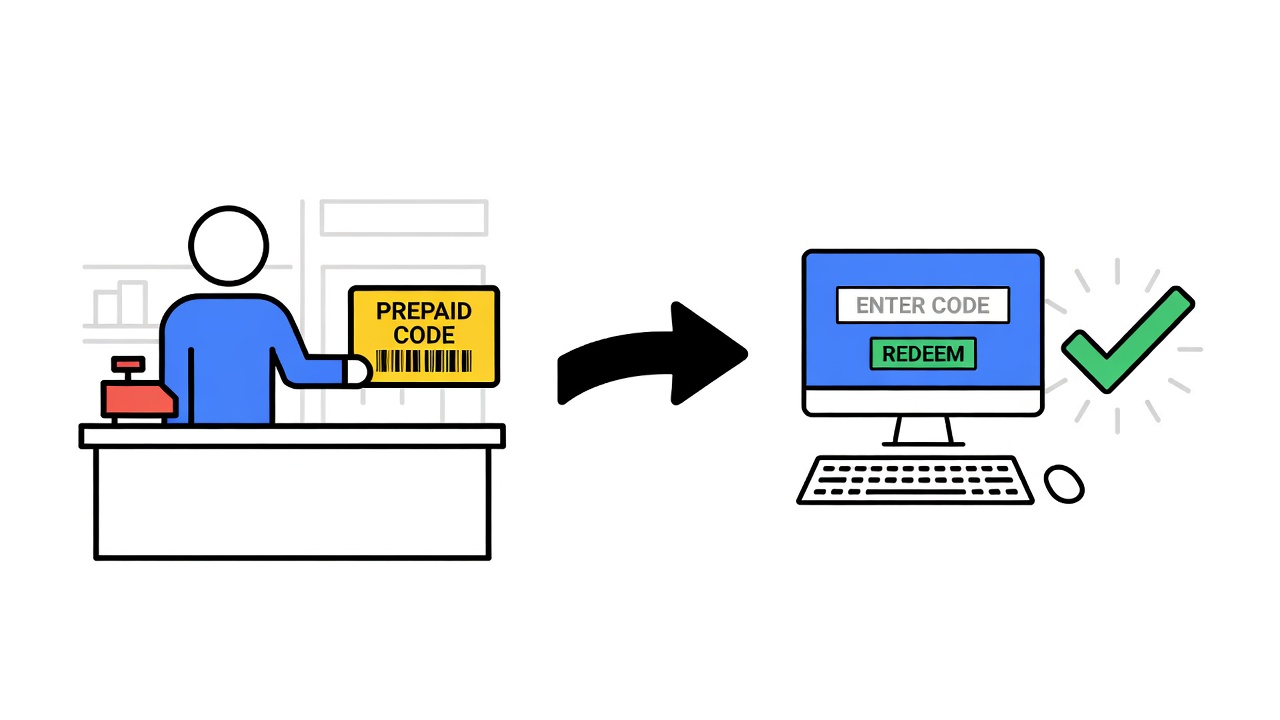
A Paysafecard is a voucher. You buy it at a store. You give the code to the casino. The casino gives you credit. It is that simple.
I dealt at high-limit baccarat tables for eighteen years. I saw every method of payment from briefcases of cash to cryptocurrency. Paysafecard is among the most straightforward.
Paysafecard is essentially a prepaid voucher system. You walk into a convenience store or gas station in Europe or other supported countries. You ask for a Paysafecard. They come in denominations, usually twenty euros, fifty euros, one hundred euros. You pay the amount in cash. You receive a physical or digital card with a sixteen-digit PIN code.
You then go online to your casino account. You select Paysafecard as your deposit method. You enter the PIN code. The casino checks it against Paysafecard's system. The code is valid. The amount is available. The casino credits your account. It takes roughly two minutes.
The virtue is simplicity and privacy. You are not giving the casino your bank details. You are not linking a credit card. You are simply redeeming a voucher code that could have come from anyone. The casino does not know who paid for the Paysafecard, only that a valid code was redeemed.
The drawback is that Paysafecard is not as widely available in North America, Australia, or Asia as it is in Europe. If you are outside Europe, your payment options are limited. Also, Paysafecard has maximum amounts per transaction and per month. You cannot deposit unlimited amounts this way. For high-stakes play, other methods are necessary.
The Mechanics
When you enter a PIN code at the casino, Paysafecard verifies that the code exists, that it has not been redeemed, and that it has sufficient balance. This takes seconds. Once verified, the balance is transferred from the Paysafecard account to your casino account.
The casino and Paysafecard have a settlement process. Paysafecard collects the money from voucher sales. The casino collects money from player deposits. Paysafecard and the casino settle accounts daily or weekly depending on their agreement.
The advantage to Paysafecard from a casino perspective is that the system is fully compliant with AML regulations. The customer who bought the card is on record. If needed, Paysafecard can provide information about who purchased the card. This creates an audit trail.
From a player perspective, Paysafecard offers privacy without anonymity. You are not anonymous. Your purchase of the card is recorded. But the casino does not know who bought the card, only that a valid code was redeemed.
The fee structure is typically low. Paysafecard takes a small percentage of each transaction (roughly 3 to 5 percent), and the casino passes some or all of this to the player in the form of slightly worse odds or smaller bonuses. But the fee is modest compared to credit card processing (which can be 2 to 3 percent) or cryptocurrency processing (which can be 1 to 2 percent but with higher volatility).
For a high-stakes player, Paysafecard is not ideal because of deposit limits. But for a recreational player in Europe, it is straightforward and trustworthy. Walk in to any shop, buy a voucher, and play.