

Molly's Game: The Real Story Behind the Hollywood Poker Nights
Molly Bloom ran poker games for celebrities and athletes in Los Angeles. The story is not about glamour. It is about the mechanics of hosting a high-stakes game and what happens when the stakes get too high.
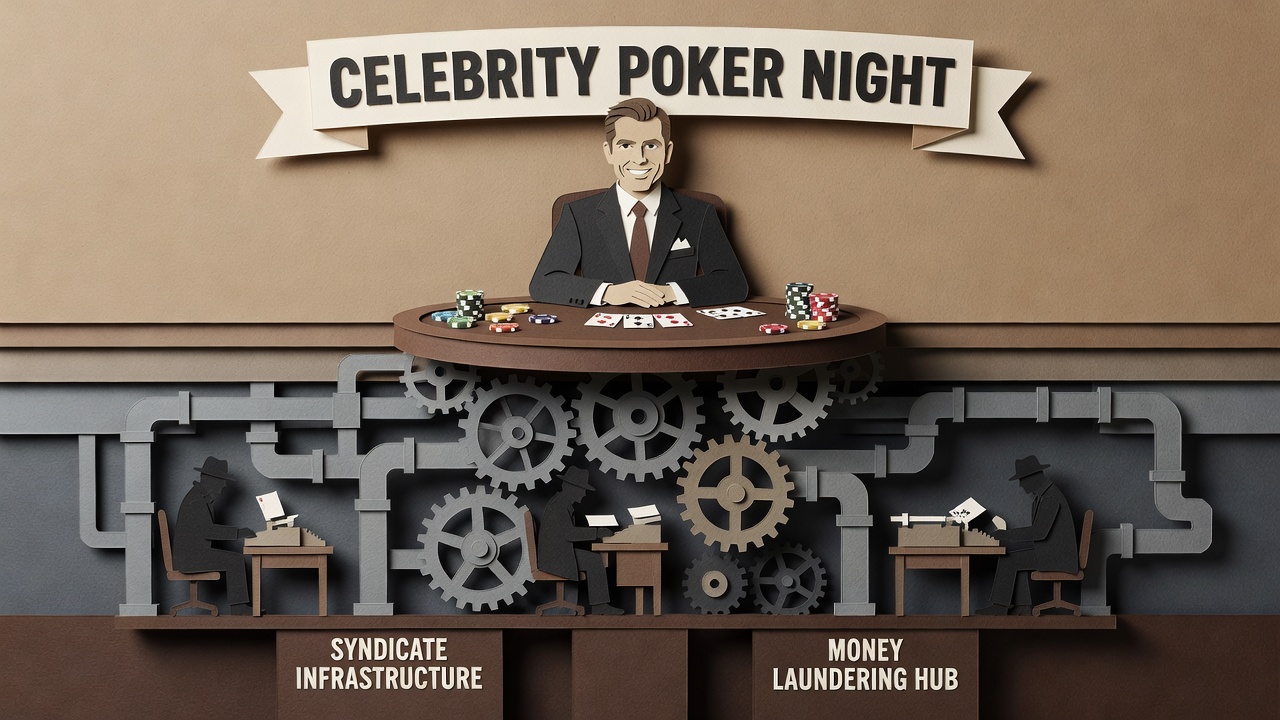
Molly Bloom was a club promoter in Los Angeles when she started hosting poker games in 2004. She picked a game host at a private poker room, learned the ropes, and decided she could do it better. By 2006, she was running nightly games from hotel rooms and private residences. The stakes climbed: $1,000-$2,000 blinds, games with pots regularly exceeding $500,000.
The players were celebrities, athletes, and wealthy businessmen. Tobey Maguire played regularly. Leo DiCaprio showed up. A few unnamed hedge-fund managers were the big money. Bloom did not play; she took a rake (a percentage of each pot, typically 3-5%), and she made money hand over fist.
The game was clean. House rules were posted. Players were vetted. Bloom kept detailed records. She enforced collusion rules and sidelined players who acted out of turn. The game had structure and integrity. Players knew they were in a fair game.
The profits were substantial. Bloom reportedly made $500,000 in a single year (2007-2008). The growth was rapid. She expanded to multiple games, hired a team of runners, and began to feel like she had built something.
The Mechanics of a High-Stakes Game
Running a game at this level is not casual. Bloom had to manage several things simultaneously: chip float (making sure you have enough chips to cover the action), player psychology (managing egos and keeping the game friendly), house rules (enforcing them consistently), and cash management (handling hundreds of thousands of dollars per night).
The chip float is important. If a game has blinds of $1,000-$2,000 with multiple players and deep stacks, you might need $2 million in chips on the table on any given night. Bloom had to source chips, insure them, and keep them secure. When a player wanted to leave, she had to buy them out in cash.
Player psychology was equally critical. High-stakes poker attracts ego. Players want to win, yes, but they also want to feel smart. They want to feel like they are outsmarting everyone. Bloom had to manage egos without seeming to manage them. She had to keep the game social and fun, not tense.
House rules enforcement was her jurisdiction. A player acting out of turn. A chip moved across the line by accident. A dispute over a pot. Bloom had to rule on these quickly and fairly. Her credibility as an impartial arbiter was worth as much as the chips.
The Transition to Trouble
The game ran clean for a few years. But around 2008-2009, several things happened. The financial crisis hit, and a lot of the players had less money to lose. Some of the regular whales were running out of cash or had pulled back. And Bloom's ambition grew.
She began to take larger cuts. She started providing chips on credit to players who wanted to rebuy. She began to intermingle her own money with the house money. The separation between the game's integrity and her personal interest began to blur.
More problematically, some players were no longer satisfied with a fair game. They wanted to win badly enough that they asked Bloom to steer the game in their favor. Could she make sure they were seated favorably? Could she talk to other players and soften them up? Could she help identify soft players?
Bloom refused outright. But the pressure mounted. Players with large egos and losing streaks wanted her to somehow help them win. The game was moving from being a neutral arena to being a negotiation between her and every player about what they wanted.
High-stakes poker games fail when the host loses the ability to be neutral. The moment a host is perceived as favoring one player over another, the game's integrity dies.
The Federal Involvement
The games ran from 2004 to 2010. In 2011, Bloom was indicted on money-laundering charges. Federal agents had been monitoring the games, concerned about the source of the money and the size of the operations. Bloom had been hosting games with criminal elements and players connected to organized crime, though she claimed she did not know.
The investigation revealed that at least one game had been backed by a known criminal organization. Bloom maintained that she did not know this when she hosted it. She may have been telling the truth. Or she may have known and rationalized it. Either way, she was now facing federal charges.
Bloom ultimately pleaded guilty to a reduced charge. She faced prison time. She wrote a memoir. The story became the basis for a Netflix film directed by Aaron Sorkin.
What the Game Reveals
The Molly's Game story is often told as a glamorous underworld of celebrity poker. But the reality is more instructive. It is the story of a game host who built something genuinely useful (a clean, well-run game at high stakes) and then watched it deteriorate because the incentives changed.
High-stakes poker games are inherently fragile. They depend on trust. Once that trust is compromised, the game collapses. Bloom's mistake was not hosting celebrities. It was allowing the distinction between herself as an impartial host and herself as a profit-maximizing businesswoman to blur.
The players, for their part, revealed a truth about high-stakes gambling: some people will ask for anything if they are losing. They will ask the host to cheat on their behalf. They will ask for rules to change. They will ask for favors. The host's job is to say no, every time.
Bloom did not always say no. And when the federal government decided to get involved, the game ended. The house always loses when it tries to be both a neutral arbiter and a partisan.