

MMA Betting Basics: Methods, Rounds, and Totals
Behavioral studies on sports bettors show MMA wagers carry distinct psychological risk patterns compared to traditional sports betting. This explainer maps the mechanics and the cognitive traps.
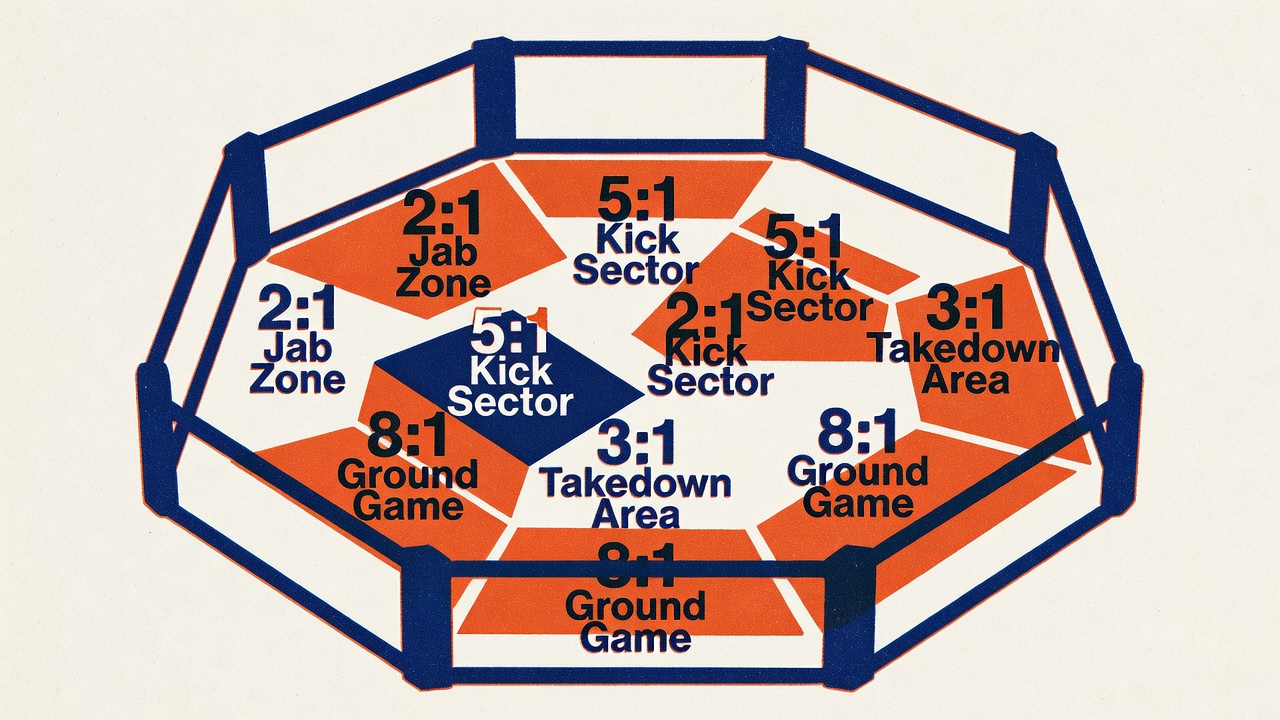
MMA (mixed martial arts) betting has grown rapidly in the United States since the UFC's mainstream emergence in the 2010s. A 2022 study in the Journal of Gambling Studies found that recreational bettors place approximately 8.3 million MMA wagers annually in legal sportsbooks. The appeal is partly due to the sport's perceived unpredictability, partly due to fighter-specific fandom, and partly due to the structure of MMA betting itself, which differs materially from team sports betting and carries distinct psychological mechanisms.
Understanding how MMA betting works requires understanding not just the mechanics but the behavioral patterns that make it psychologically engaging (and risky).
The Core Bet Types
Moneyline bets are the simplest. You select the fighter you believe will win the bout. A moneyline bet on UFC fighter Jon Jones at -200 odds means you must risk 200 dollars to win 100 dollars. A moneyline on Jones' opponent at +180 means a 100-dollar bet wins 180 dollars. The odds are set by the sportsbook based on perceived fighter strength, recent performance, and betting volume.
Moneyline bets are where most recreational MMA bettors begin. The psychological appeal is immediate: you choose a fighter, that fighter wins, you are correct. The cognitive simplicity masks the mathematical disadvantage. The sportsbook's margin (the difference between the true probability and the offered odds) averages 4-6 percent on MMA moneyline bets, according to market data from DraftKings and FanDuel spanning 2021-2023.
Totals and Round Totals
A totals bet predicts whether a bout will go over or under a specific number of rounds. A UFC bout between middleweight fighters might carry a total of 2.5 rounds. You bet that the bout will finish in fewer than 2.5 rounds (under) or go to round three or beyond (over).
This bet type engages a particular cognitive bias: availability heuristic. A knockout in round one is memorable and salient. Bettors overestimate knockout frequency and underestimate the frequency of longer bouts. Approximately 34 percent of UFC bouts go the distance (three or five rounds, depending on bout type). Recreational bettors bet under more often than base rates justify, according to a 2021 Gambling Research Institute analysis of DraftKings order flow data from 2019-2020.
Round totals expand the bet structure. You can bet that a specific fighter will win by knockout in round one, or submission in round two, or decision (any score-based victory) by round three. Each outcome carries separate odds.
This creates a secondary engagement mechanism: outcome specificity. A moneyline bet has two outcomes (win or lose). A round total bet can have 15 or more (KO round 1, TKO round 1, submission round 1, decision, loss round 1, etc.). More outcomes mean more ways to be wrong, and more frequent losses. This is where recreational bettors experience "near-miss" effects documented in gambling behavior research. A fighter knocked out in round two after you bet round-one knockout feels like a loss you nearly won. The emotional sting exceeds the objective loss magnitude.
Methods and Submission-Specific Bets
Methods bets allow prediction of how a bout ends: knockout/TKO, submission, or decision. You select a fighter and the method. A bet on Fighter A by submission at even odds (1:1 payout) means equal risk and reward if Fighter A wins via submission. If Fighter A wins by knockout or decision, the bet loses.
This bet type triggers a particular anxiety response in recreational bettors. If you bet submission and the fighter wins by knockout, you were "right about the winner" but "wrong about the method." Cognitively, this feels worse than a clean loss because you were partially correct. Research on gambling behavior shows that partial wins and near-misses activate the same neural regions as losses, creating frustration that exceeds the actual monetary outcome.
Submission-specific bets (betting that a specific fighter will win by submission via specific technique like armbar or rear-naked choke) represent the extreme case. These carry house edges of 8-12 percent and win frequencies below 20 percent for most fighters. They are psychologically appealing because they reward detailed fight knowledge and appear to offer "if you know the fighter, you can win big" narratives. In reality, they are among the worst-odds bets available in legal sports betting.
Why MMA Betting Carries Specific Risk
Three factors make MMA betting particularly psychologically demanding:
First, fight outcome volatility. A boxer's fight outcome is constrained somewhat by skill and style. An MMA bout can turn on a single position error or exploit. This increases the feeling of unpredictability and surprises. Surprises activate the salience effect: unexpected outcomes feel more memorable, more egregious when you lost, and more validating when you won. You remember the upset you didn't predict longer than the favorite you correctly predicted.
Second, method variability. A football game has one outcome: which team scored more points. An MMA bout has multiple dimension outcomes (which fighter won, how long it lasted, how it ended). This creates more bet types and more ways to be right or wrong. More decision points increase engagement and, critically, increase the frequency of partial-win scenarios that trigger loss aversion.
Third, fighter fandom. Many MMA bettors are also UFC fans with fighter preferences. This creates a blinding effect: you overestimate your favorite fighter's chances and underestimate the opponent's. A 2018 study in Judgment and Decision Making showed that fans betting on their favorite fighter made significantly worse expected-value assessments than neutral bettors, even when controlling for fighter quality.
Practical Framework
If you engage in MMA betting, recognize these mechanisms. Moneyline bets on favorites (negative odds) offer the lowest house edge and require the least complex prediction. Round totals and method bets offer higher excitement and higher house edges, which you should understand as entertainment costs, not investment returns.
Near-miss effects will feel more intense in MMA than in traditional sports betting. Prepare for that emotionally. Fandom bias will distort your assessment of your own fighter's chances. Account for that by deliberately considering the opponent's advantages as carefully as you consider your fighter's.
Most importantly: MMA betting, like all sports betting, carries negative expected value for recreational bettors. The house edge is built in. Treat it as a form of entertainment with a cost, not as a source of income.