

Gladys Knight: Baccarat and the Star's Public Gambling Struggles
Knight's case is instructive. Not because she is famous. But because her story is typical dressed up in a famous name.
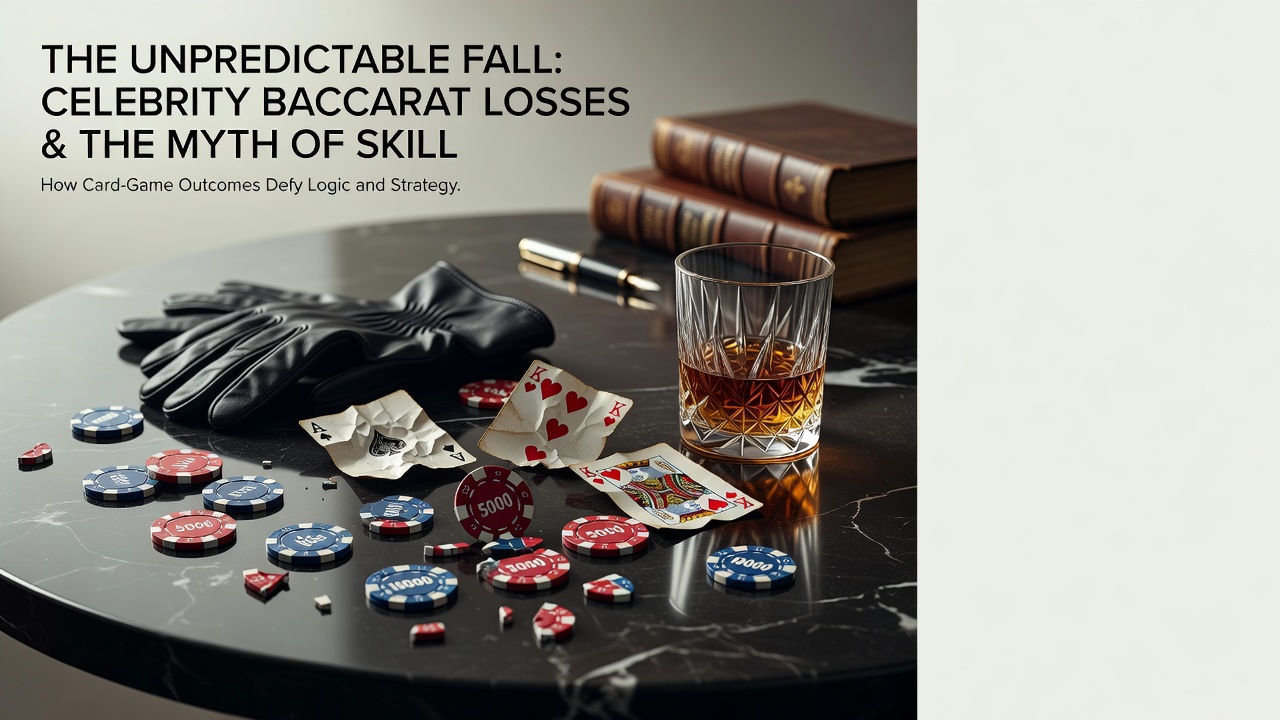
Knight's case is instructive. Not because she is famous. But because her story is typical dressed up in a famous name.
The Pattern
Knight gambled. She went to Atlantic City and Las Vegas regularly. She played baccarat, primarily. High stakes. She was known at the high-limit rooms. She would bring her husband. They would spend weekends, sometimes weeks. She lost significant money. Over time, the losses accumulated. She has spoken publicly about it, which is rare for celebrities at this scale.
What makes Knight different from the recreational gambler is persistence against mounting losses. A casual gambler hits a losing streak, feels it, stops. A problem gambler hits a losing streak and increases stakes, trying to recover. Knight hit a losing streak and kept going back. The baccarat shoe is what it is. The probabilities do not change. But the amount of money changes. The frequency changes.
The Baccarat Trap
Baccarat is specifically vulnerable to this escalation. The game is simple. The decisions are made. You are betting on the Banker or the Player. That is the scope of agency. This means the gambler's sense of control is low, but the sense of proximity to winning is high. You are sitting there. The cards are coming. One card will decide it. That proximity creates the illusion that you are close to winning. If you were just a little luckier, a little more persistent, you would break even. This is false. But it feels true while the cards are coming.
Knight gambled at high stakes. A ten-thousand-dollar hand feels weightier than a hundred-dollar hand. The emotional returns are higher. So are the financial consequences. Variance that would look like noise at small stakes looks like catastrophe at high stakes.
Why She Kept Going
Celebrity did not protect Knight. Wealth did not protect Knight. She had both. What protected against problem gambling is the ability to view losses as final and acceptable. Knight kept going back because the losses were not acceptable to her. She had the money to keep trying. That is a curse. A person without deep pockets would have stopped long ago, unable to afford the next session. Knight could afford the next session. And the one after that.
This is what separates celebrities and wealthy people from others in their gambling struggles. The brake that comes from money running out does not apply. Instead, they hit a different kind of wall. Relationship damage. Public embarrassment. Physical health consequences. These take longer to accumulate than bankruptcy.
The Technical Reality
Baccarat has a house edge of 1.06% on Banker bets. Knight could have bet on Banker forever and the math would slowly grind her down. The variance would let her win some weeks and lose other weeks. But over enough hands, the house edge would claim its percentage. This is not about skill or luck or strategy. It is math. Knight is not bad at math. She just was not thinking in terms of 5,000 hands played. She was thinking about tonight's hand.
What Knight's story reveals is that the trap catches everyone. The famous, the wealthy, the intelligent, the accomplished. The trap is in the structure of the game, not in the character of the player. Knight fought it openly, which is more than most people do. The battle she describes is honest. And the outcome teaches what needs to be taught: persistence in a negative-expectation game is not virtue. It is the way the game is designed to work.