

Choosing Between Bonus Offers for Table Game Players
What separates the player who wins from the player who loses is not luck but the willingness to examine assumptions.
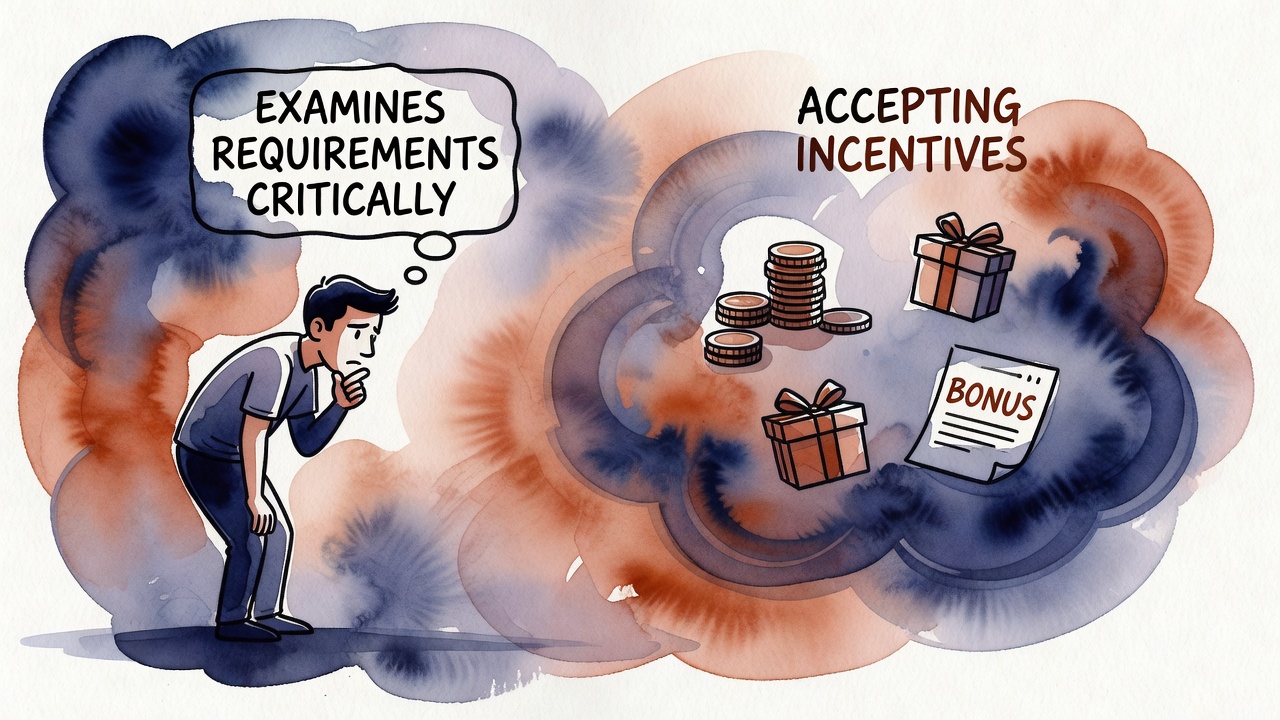
Consider the premise: a casino offers you a bonus. You experience this as a gift. Is this a reasonable interpretation?
One might examine the structure more carefully. The bonus comes with conditions. Wagering requirements. Game restrictions. Eligibility rules. These conditions have economic value. The casino has calculated what these conditions are worth in terms of expected player loss.
When you accept the bonus, you are entering a contract. The contract states that the casino will give you money if you agree to play under certain conditions. What you have purchased is the right to play on the casino's terms.
Now, from this perspective, different bonuses represent different purchases. A one hundred dollar bonus with a three-time rollover requirement is a different purchase than a fifty dollar bonus with a one-time rollover. The first requires you to risk more money to convert the bonus. The second requires less risk but comes with a smaller amount.
For a player skilled in table games (particularly blackjack), the mathematics change. A player with a 0.5 percent advantage can actually profit from a bonus that requires deep rollover commitment because the long-term advantage will eventually overcome the rollover requirement. For an unskilled player facing a 1.5 percent disadvantage, any bonus is simply a subsidy to future losses.
The Decision Framework
The skilled blackjack player should ask: what bonus maximizes the total value I can extract? This is not the largest bonus but the one with the lowest rollover requirement relative to the bonus amount, assuming all other terms are equal.
The unskilled player should ask: how can I minimize how much money I lose? The answer is to avoid bonuses entirely or to accept small bonuses with minimal rollover requirements so that the inevitable losses are at least smaller.
For a player of moderate skill (break-even to slightly negative expected value), the bonus becomes a form of insurance. A modest bonus increase the probability that a session ends positively even though the long-term outcome is still slightly negative.
Each player's optimal strategy depends on their skill level. This is an uncomfortable truth for most people because it requires honest self-assessment. Most players overestimate their skill. They think they are break-even or positive when they are actually in the negative two percent range.
A fair assessment of your skill can be determined through simple tracking. Play a hundred hands of blackjack with basic strategy at a casino that offers favorable rules. Track your results. Calculate your actual win percentage. This number is your true skill level. No casino can hide this from you. Only your own resistance to the truth can hide it.
Once you know your true skill level, bonus selection becomes a straightforward optimization problem. If you are negative expected value, minimize bonuses. If you are break-even, neutral bonuses are acceptable. If you are positive expected value, maximize the rollover depth while maintaining positive long-run returns.
The player who understands this framework will make better bonus decisions. The player who does not understand it will continue to chase bonuses that seem attractive but work against their interests.