

Can You Really Beat Live Roulette? An Honest Look
The question is not whether you can beat roulette. The question is whether you can beat it faster than you can make money another way.
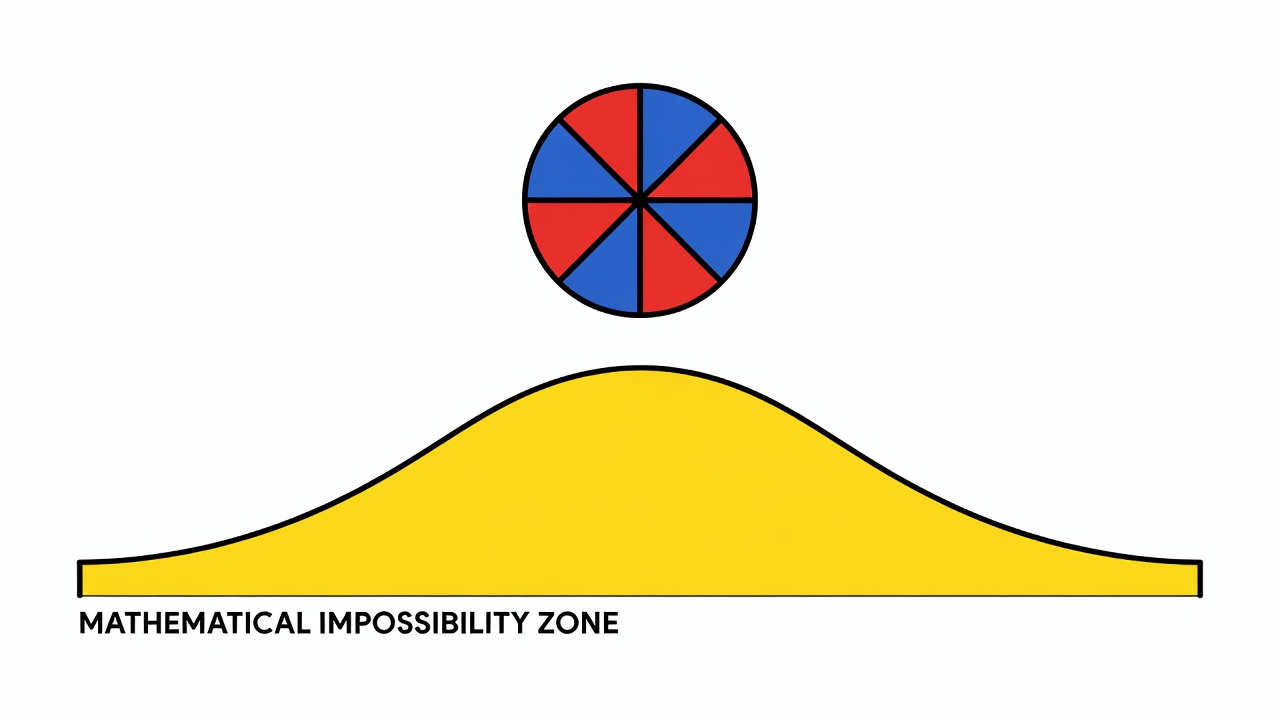
I spent forty years rebuilding slot machines. I know how games work at the mechanical level. I worked with casino engineers on the roulette side too. I can tell you with certainty: no, you cannot beat live roulette. I can also tell you why people keep trying.
Roulette is a wheel with thirty-seven pockets (in European games) or thirty-eight (in American games). The ball lands in one. The game pays out at thirty-five to one for a single-number bet. The house keeps the two unpaid numbers (zero and double-zero in American). The house edge is 2.7 percent in European and 5.26 percent in American. That edge is built into the payout structure. It cannot be beaten through play because the edge is not a function of player skill; it is a function of incomplete payouts.
There are three things people try. First, biased wheel analysis. The idea is that a worn wheel has slight imperfections that make certain pockets more likely. This was theoretically possible forty years ago. Wheels were hand-manufactured. They had tolerances. I have seen wheels that clearly favored certain sections. But modern wheels are manufactured to within 0.01 millimeters. They are checked after every thousand spins. Bias is not a realistic advantage anymore.
Second, dealer signature. The idea that dealers have unconscious patterns in how they throw the ball and release it. A dealer might release from the same angle every spin, and the ball might land in a predictable section as a result. I have never seen this work in practice. Professional dealers are trained to vary release angle, ball speed, and throw. A dealer who created a signature would be identified and retrained. This is not a real advantage.
Third, visual ballistics. The idea that you can observe the ball speed and wheel position and mathematically predict where it will land. This was theoretically possible before computers. Modern roulette software and hardware is designed to prevent it. Bets are closed before the ball is thrown. The spin parameters are randomized. This is not possible.
The Psychology
Why do people believe roulette can be beaten? Because a single profitable day exists. You get lucky. You win money. You think you have found a pattern. You come back and try to exploit it. You lose. This is called the Texas sharpshooter fallacy. You draw the target around the bullet holes after the shot.
People also believe it because of the narrative structure of beating the house. Every advantage play method starts with a true idea. Card counting is real. Shuffle tracking was real. Wheel bias was real. People know these were real, so they assume roulette still has these exploits. They do not. The casinos closed them.
Live roulette specifically, played in an online casino with a live dealer, has the additional problem of latency. You are watching a video feed. There is a one-to-three-second delay between the actual spin and what you see on your screen. By the time you see the ball landing, the bet is already locked in. You cannot react to new information because the information is already stale.
The only way to beat roulette is to not play it. But I understand the appeal. Roulette is beautiful. The wheel is elegant. The game is simple. There is no skill ceiling to reach, no strategy to master, no opponent to outthink. You just watch the wheel spin and see what happens. That simplicity is part of the trap. It feels like anything could happen. And anything can happen, in the short term. But the long term is mathematics.
If you are asking whether you can beat the odds, the answer is no. If you are asking whether you can get lucky and have a winning session, the answer is yes. If you are asking whether you can turn a hundred dollars into a thousand dollars through superior roulette play, the answer is almost certainly no.
I have seen exactly two people who seemed to have found something. Neither of them would explain their method. One played for three months and then quit. One played for nine years and then vanished. Both might have just been lucky. Or they might have found something the casinos had not figured out yet. But I have never seen a method that worked consistently across multiple casinos and multiple wheels.
Play roulette if you like roulette. Do not play it thinking you are going to beat it. You are not. Accept the house edge and play accordingly. Bet small. Play for fun. If you win money, leave. If you lose it, that was the cost of entertainment. That is the honest way to approach the game.