

How Weather Controls Baseball Betting More Than You'd Think
Wind speeds affect the distance a baseball travels more than most bettors account for. A 15-mile-per-hour headwind can turn home runs into fly-outs. Your totals pick probably didn't budget for that.
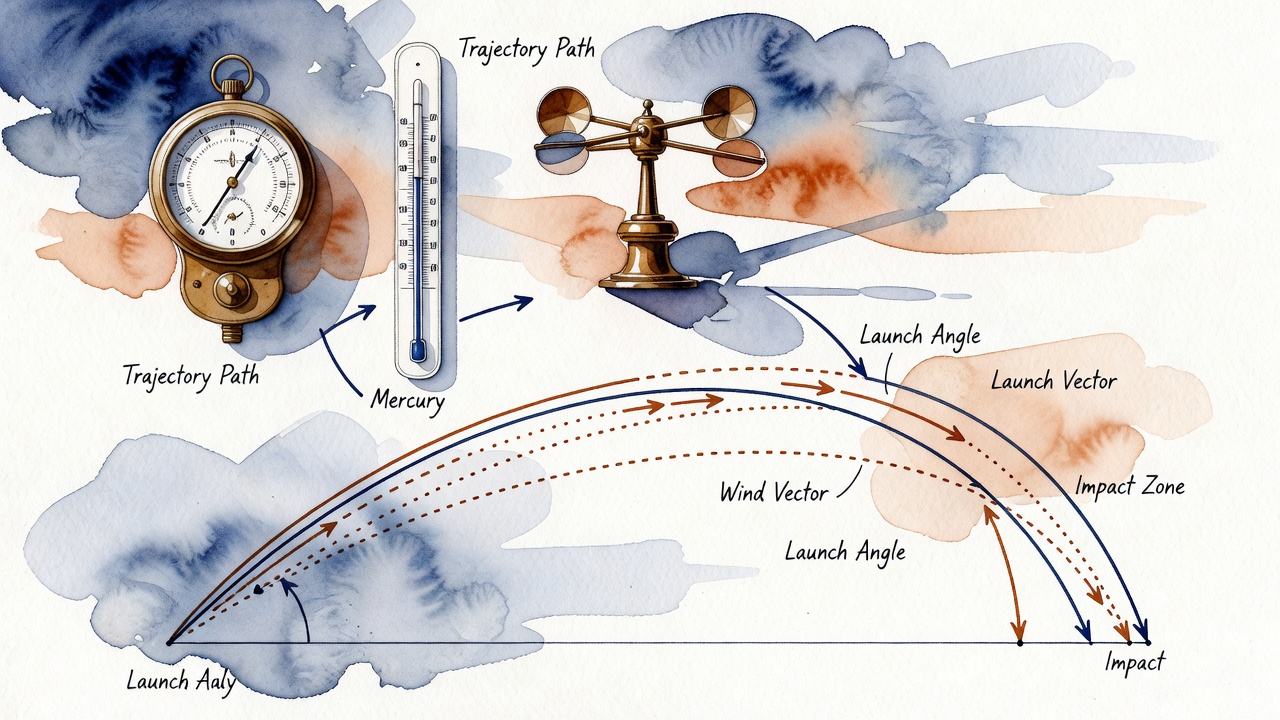
You know what changes a baseball game more than a reliever's heart rate. Wind. Just wind. No one bets on the wind because the wind doesn't have a contract or an injury history.
Here's the thing about baseball totals. The oddsmakers price in the lineups. They price in the park dimensions. Yankee Stadium plays short down the line. Fenway's green monster looms. Every sportsbook knows this. But wind is the quiet adjustment that happens in the two hours before first pitch, and half the bettors are still looking at last night's closing line.
The Physics of Moving Air
Baseball is a game of margins. A home run is 400 feet. A fly-out is 380 feet. The difference is 20 feet. That's nothing. That's a hard breeze. Wind blowing out to left field adds maybe 15 to 20 feet to fly balls. Wind blowing in kills them. Subtracts distance. Turns what would be a homer into a line drive to the outfielder's glove.
June. Denver. Coors Field. No wind. The ball carries forever. Elevation does that too, but wind matters. Wind blowing out to left adds three, four, five home runs to the over prediction. Wind blowing in, you lose those. The line moves. The sharp bettors move first. The public follows. By game time, the true number has already been baked into a new line.
Except sometimes it hasn't been. Sometimes the wind shifts at game time and no one's had time to adjust. That's opportunity.
- Headwind reduces fly ball distance by 5 to 12 percent depending on speed
- Outfield wind direction matters more than velocity at most parks
- Temperature affects air density, which affects carry
- Humidity has a smaller effect than people think
The pitcher cares about wind. A submarine reliever with a rising fastball plays differently in a strong wind. The hitter cares. Spray patterns change. Exit velocity stays the same. Distance doesn't. The over that looked juicy at minus-110 looks different when you account for a 10-mile-per-hour headwind.
Why Books Price It Wrong Sometimes
The problem is timing. Oddsmakers work from the morning weather forecast. The forecast says 8 miles per hour from the south. They adjust. They move the line to reflect that. Then at 6 p.m., a storm front rolls in. Suddenly it's 15 miles per hour from the north. The line's been set for hours. It doesn't move because the book's already taken action at the old number.
Or the weather doesn't change. The initial forecast was just wrong. Some meteorologist looked at a map at 7 a.m. and said, "Looks calm." It wasn't. By game time, there's a headwind, and the books are stuck with a line that was priced for still air.
"The ball does what the air tells it to. If the air's decision changes late, the line doesn't always follow."
This is why the sharp bettors check weather updates until the minute the game starts. Not because they're paranoid. Because they understand that baseball is a physics experiment, and physics respects the weather more than it respects your pregame notes.
What to Watch
Don't just know the park. Know what wind does to that park. Fenway and Yankee Stadium play short in some directions and deep in others. Coors Field is always long. But the wind interaction changes constantly. Know which direction adds distance at your book's game. Know which direction kills it.
Temperature matters less than wind, but it matters. Warm air is less dense. Balls carry further. Cold air is dense. They don't. April games in Boston are different from August games in Boston because of temperature alone. A 70-degree May afternoon with a tailwind is a different totals environment than a 50-degree October night with a headwind.
The real edge comes from checking the weather updates at game time, not the night before. The early line is based on yesterday's forecast. The sharp move is based on today's reality. If reality changed overnight, the public hasn't caught up. The line hasn't moved as much as it should. That's where you find value, if you're looking at something beyond the odds and the standings.
Wind is honest. It affects every team equally. It doesn't care about your unit size or your confidence level. It just moves the ball a little. That little is the difference between an over and an under. Between a cash and a loss. The books know this. Most bettors don't. That's the whole edge right there.